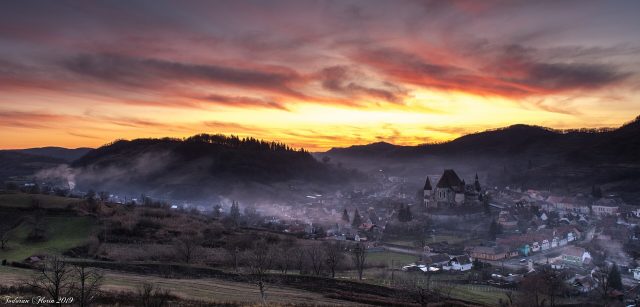
Tissemsilt
Algiers · 8 places
Photo: Saber68, CC BY-SA 3.0
Tissemsilt sits quietly in the folds of the Tell Atlas, a place where the pace of life hasn’t so much slowed as settled into something older, something closer to the rhythm of the land itself. It’s not a city that announces itself with grand monuments or polished tourist trails. Instead, it lingers in the spaces between—between the mountains and the desert, between the past and the present, between the hurried world and the one that still moves to the sound of a donkey’s hooves on cobblestone or the wind rustling through olive groves. Here, the air carries the scent of fresh bread from neighborhood bakeries and the sharp, sweet aroma of mint tea steeping in small glasses, served on doorsteps where neighbors gather to talk as the sun dips low.
Perched at nearly a thousand meters above sea level, Tissemsilt feels like a breath of cooler, crisper air after the stifling heat of the plains. The surrounding hills roll gently, covered in sparse forests and grazing lands where shepherds still tend flocks of sheep and goats, much as their ancestors did. Beyond the city limits, small villages cling to the slopes, their clay houses weathered by time but unchanged in their essential simplicity. For travelers who make the journey, Tissemsilt offers a glimpse of Algeria as it was before mass tourism—less a destination than a quiet persistence of tradition, where the modern world hasn’t so much been rejected as it has simply never fully arrived.
The city itself is small enough to explore on foot in an afternoon. Its heart is a maze of narrow, stone-paved streets where houses lean into one another, their balconies nearly touching overhead. There are no towering skyscrapers or wide boulevards here, just low-slung buildings of sandstone, their facades warmed by the sun. Mosques with slender minarets punctuate the skyline, while small shops spill onto the sidewalks, selling everything from handwoven rugs to sacks of spices. The central square is where life gathers—old men hunched over domino games, children darting between them with a soccer ball, women in bright dresses weaving through the crowd toward the market. On market days, the city hums with energy: vendors spread their wares on the ground, voices rise in bargaining, and the air thickens with the smells of smoked meat, ripe fruit, and the sharp tang of cumin.
What Tissemsilt lacks in grand museums or ancient ruins, it makes up for in the way it holds its history—not as something to be displayed, but as something lived. The past isn’t confined to plaques or exhibits; it’s in the way a shopkeeper greets a customer, in the stories an elder might share over tea, in the way the light slants across the mountains at dusk. There’s no pressure to perform for visitors here. The city doesn’t try to impress; it simply exists, and in that quiet refusal to conform, it becomes something rare—a place where time feels less like a line and more like a circle, turning slowly, patiently.
For those who come, Tissemsilt isn’t just a stopover on the way to the Sahara or the coast. It’s a place that lingers in the memory, not for what you see, but for what you feel—the hush of the evening air, the warmth of a stranger’s hospitality, the sense that here, life moves at its own unhurried pace. It’s not a city to be ticked off a list, but one to be experienced: through the taste of tea sweetened with too much sugar, through the sound of laughter spilling from a café, through the quiet conversations that stretch long into the night. And perhaps that’s why those who visit once often find themselves drawn back, as if pulled by the promise of something they can’t quite name.
See & Do
8 places
Places on the map
Marker colour follows the categoryClimate and weather
Detailed weather: Tissemsilt- Average temperature
- 16 °C
- Precipitation per year
- 311 mm
- Sunshine hours per day
- 8.3 h
Average air temperature
°C
6
8
10
13
18
24
28
27
22
17
11
8
Jan
Feb
Mar
Apr
May
Jun
Jul
Aug
Sep
Oct
Nov
Dec