- Home
- Mesopotamia
- Tal Afar

Tal Afar
Mesopotamia · 6 places
Photo: Wikimedia Commons, Public domain
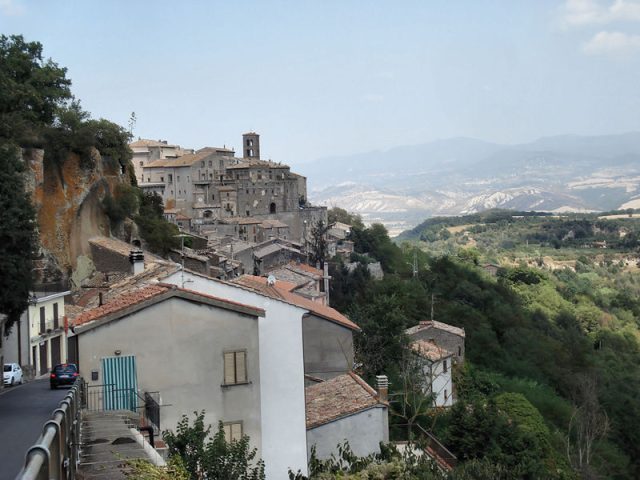
Tall Afar is one of those places that rarely makes it onto tourist maps, yet for those drawn to the layered history of Mesopotamia, it offers something far more compelling than a typical stopover. Nestled in Iraq’s Nineveh Governorate, not far from the Syrian border, the city sits along ancient trade routes that once connected East and West. Over centuries, it absorbed the influences of Assyrians, Arabs, Turkmen, and Kurds, each leaving their mark in ways that still linger today. The result is a place where time feels stacked rather than linear—where modern life unfolds against a backdrop of narrow alleys, crumbling minarets, and the quiet persistence of tradition.
The architecture here doesn’t dazzle in the way grand palaces or gleaming mosques might, but there’s a quiet resilience to it. Homes built from clay and stone, with flat roofs and shaded courtyards, are designed to withstand the heat, their simplicity speaking to generations of adaptation. At the city’s heart, the remnants of an Ottoman fortress stand as a modest reminder of the region’s strategic past. The structure itself is unassuming, but climbing its weathered walls rewards you with a sweeping view of the surrounding plains, where the steppe stretches toward the foothills of the Sinjar Mountains. On clear days, the distant ridges seem to hover just beyond reach, a faint outline against the horizon.
Life in Tall Afar moves at its own unhurried pace, shaped by traditions that have endured despite everything. Clan ties still matter here, and hospitality isn’t just a courtesy—it’s a way of being. If you arrive during a local festival, the streets come alive with music, vibrant textiles, and the scent of food that’s unique to this corner of the world. The cuisine is a point of pride: lamb pilaf rich with spices sourced from neighboring regions, freshly baked *lavash* pulled from clay ovens, and sweets layered with dates and nuts. In the tea houses, men gather to sip strong black tea or Turkish coffee, debating everything from politics to family matters, while women share stories and recipes in small, tight-knit circles.
This wasn’t always a quiet backwater. Tall Afar’s history is marked by upheaval—battles during World War I, decades of conflict in the 20th and 21st centuries, and periods of occupation that left deep scars. In recent years, it has become a symbol of resilience for those who call it home, a place that has weathered destruction but refused to disappear. Today, the city is slowly rebuilding, though traces of its turbulent past remain visible in certain neighborhoods. Yet life persists: markets bustle with vendors selling vegetables and spices, children dart through the streets, and elders sit in doorways, watching the rhythm of generations unfold.
For travelers, Tall Afar isn’t the kind of place you visit to tick off a checklist. There are no crowded tour buses or souvenir stalls here, no carefully curated highlights. Instead, it offers a rare glimpse of Iraq beyond headlines—a chance to see how history and daily life intertwine in ways that are messy, authentic, and deeply human. It’s not an easy destination, nor is it one that reveals itself quickly. But for those willing to slow down and look closer, Tall Afar holds stories that most other places can’t tell.
See & Do
6 places
Places on the map
Marker colour follows the categoryClimate and weather
Detailed weather: Tal Afar- Average temperature
- 22 °C
- Precipitation per year
- 265 mm
Average air temperature
°C
9
10
13
22
27
34
37
36
31
24
16
11
Jan
Feb
Mar
Apr
May
Jun
Jul
Aug
Sep
Oct
Nov
Dec