Suzhou
China · 7 places
Photo: 铁头娃蛤蛤, CC BY-SA 4.0
Suzhou doesn’t need grand comparisons to stand out, though it’s often called the Venice of the East. The canals here are no tourist spectacle—they’re part of daily life, winding through the old quarters like veins, lined with stone embankments worn smooth by time. Wooden boats with curved prows glide past, their hulls low in the water, ferrying goods or passengers just as they have for centuries. But Suzhou isn’t a copy of anywhere else. It moves to its own rhythm, unhurried and deliberate, where the day unfolds over tea in a shaded courtyard or a slow stroll across one of the arched bridges that stitch the city together.
The gardens are what most people come to see, and for good reason. Each one is a masterpiece of balance, where water, rock, and greenery are arranged not just to please the eye but to evoke a mood. The Humble Administrator’s Garden plays with perspective, making small spaces feel vast—ponds mirror pavilions, winding paths lead to hidden viewpoints, and every turn reveals another carefully framed scene. The Lion Grove Garden is a labyrinth of weathered limestone, its jagged rocks resembling crouching animals, while the Pavilion of Blue Waves feels like a living painting, where light and shadow shift with the time of day. These aren’t places to rush through. They demand patience, the kind that lets you notice the way a single branch bends over the water or how the sound of a distant flute carries across a courtyard.
Silk is the other thread running through Suzhou’s history, quite literally. The city has been weaving it for over two thousand years, and the craft hasn’t changed much. In the old workshops, you can still see artisans at their looms, their hands moving with practiced precision as they work with threads so fine they’re nearly invisible. The silk here is famous for its weightless feel and subtle sheen, a fabric that seems to breathe. The Silk Museum traces the journey from silkworm cocoon to finished cloth, a process that once sent bolts of fabric along the Silk Road to distant lands. On Shantang Street, the shops sell everything from scarves to embroidered screens, and if you’re lucky, you might catch a demonstration of the painstaking art of silk painting or the intricate stitching that can take months to complete.
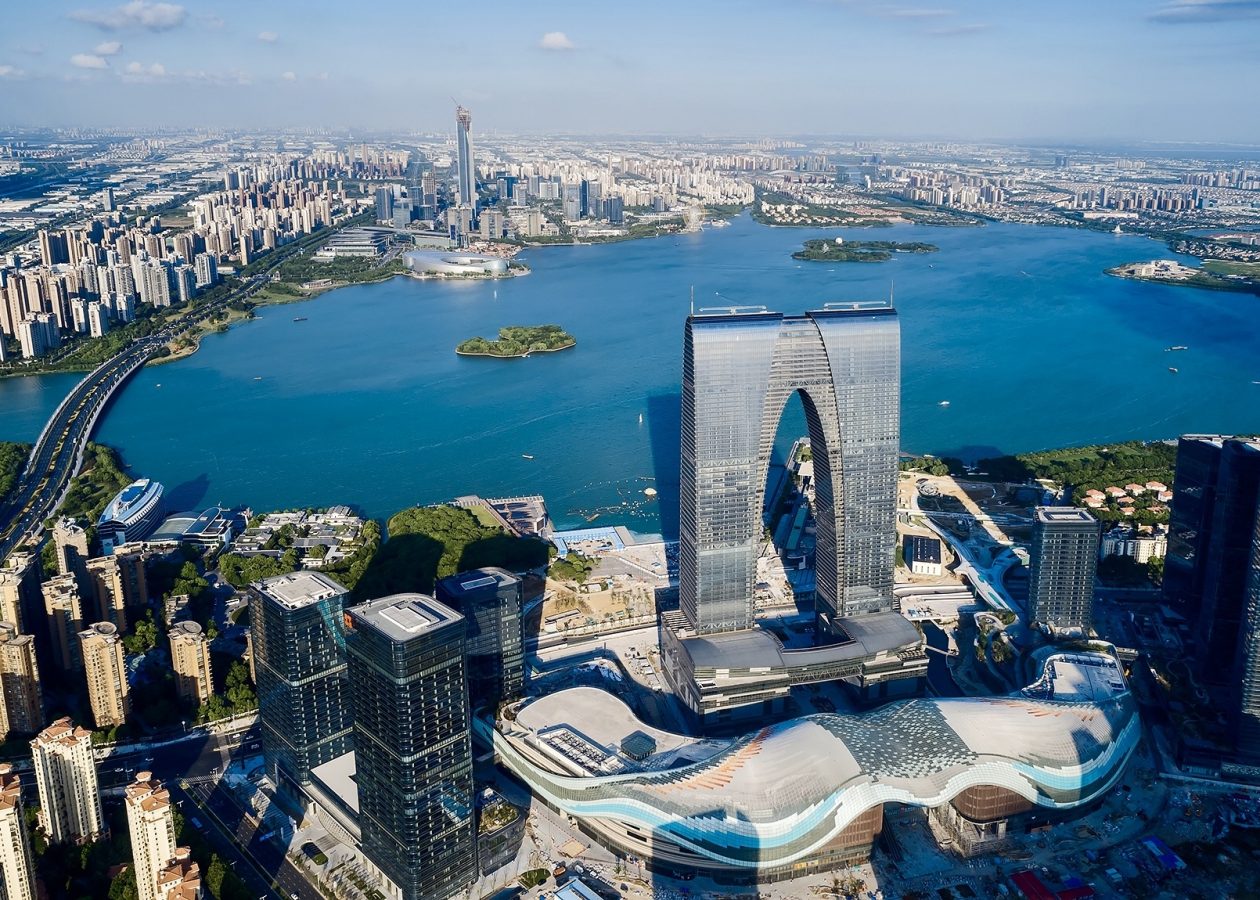
Yet Suzhou isn’t trapped in the past. The modern city hums alongside the old, with glass towers rising along the Jinji Lake waterfront, their reflections shimmering in the water at dusk. The contrast is striking but never jarring—here, a centuries-old canal house might stand next to a sleek café serving matcha lattes, and no one seems to find it odd. You can rent a bike and pedal along the waterways, passing under stone bridges and past neighborhoods where laundry hangs from bamboo poles, the scent of jasmine mixing with the damp earth. The city has a way of surprising you, shifting from a quiet museum of Ming Dynasty lanes to a vibrant hub where night markets spill onto the streets and neon signs flicker over alleyways.
What makes Suzhou special, though, are the small things. The morning markets where vendors sell lotus roots and freshwater fish straight from the canals, their stalls piled high with greens and chilies. The evening food stalls serving up steaming dumplings or sweet tangyuan, their sticky rice dough filled with black sesame paste. In the parks, elderly locals practice tai chi at dawn, their movements slow and deliberate, while children fly kites shaped like dragons against the pale sky. On rainy days, the city softens, the edges of the canals blurring into mist, and time seems to slow just a little. Suzhou doesn’t try to impress with grandeur or spectacle. It simply exists, a place where the past and present weave together so seamlessly that you stop wondering where one ends and the other begins.
Stay
0 placesNothing in this category yet — the catalogue is still growing.
All placesPlaces on the map
Marker colour follows the categoryClimate and weather
Detailed weather: Suzhou- Average temperature
- 17 °C
- Precipitation per year
- 1267 mm
Average air temperature
°C
5
6
12
16
21
25
29
29
24
19
13
5
Jan
Feb
Mar
Apr
May
Jun
Jul
Aug
Sep
Oct
Nov
Dec


