Old Crimea
Russia · 8 places
Photo: VIgorjok, CC BY-SA 3.0
Nestled in the foothills of Crimea, Stary Krym feels like a place where time has quietly settled into the cracks of its cobblestone streets. The town sprawls across gentle slopes, surrounded by vineyards and forests that soften the edges of its old stone buildings. There’s no rush here—just the slow rhythm of daily life, where stray cats nap in sunlit courtyards and the scent of fresh bread drifts from bakeries in the morning. The air carries a hint of wild herbs from the nearby hills, and the only sounds breaking the silence are the occasional clatter of a passing cart or the distant call of a muezzin.
History lingers in Stary Krym like an uninvited but welcome guest. Once known as Solkhat, it was a bustling stop on the Silk Road, where merchants from Genoa, the Golden Horde, and the Ottoman Empire traded spices, silk, and stories. The ruins of the 14th-century Uzbek Khan Mosque still stand, its crumbling walls whispering of a time when the town was a crossroads of empires. Nearby, the remains of medieval bathhouses hint at the weary travelers who once soaked in their steam, washing off the dust of long journeys. Later, under Russian rule, the town became a quiet backwater, preserving its layered past in the quiet persistence of its streets.
The town’s cultural mix is as subtle as it is enduring. Russian and Crimean Tatar voices blend in the markets, where vendors sell honey thick with the taste of mountain flowers and cheese aged in clay pots. The food here carries the same quiet fusion—pilaf cooked with local herbs, dumplings stuffed with lamb, and pastries drizzled with honey, all served in unassuming cafés where the walls are lined with old photographs. In summer, the central square comes alive with fairs, where winemakers from nearby villages pour glasses of light, crisp wines made from grapes grown in the sun-drenched hills. Winter brings a different kind of warmth, with woodsmoke curling from chimneys and the scent of spiced tea mingling with the cold air.
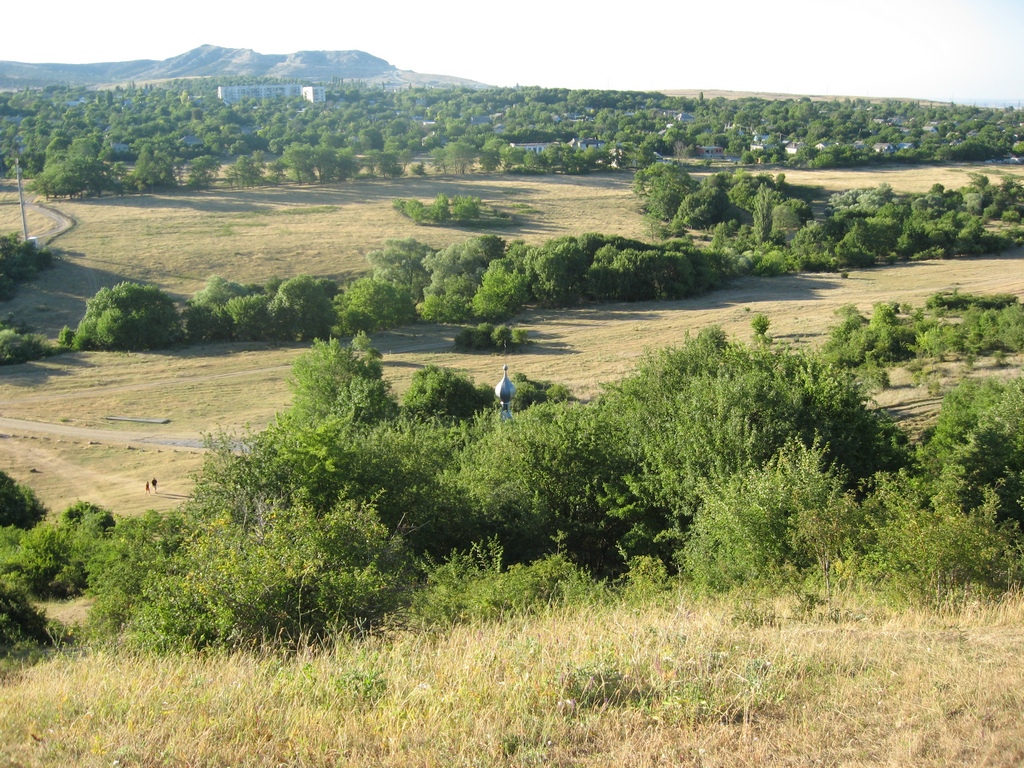
Beyond the town, the landscape unfolds in gentle waves of green. Forests stretch up the slopes of the surrounding hills, their paths winding past forgotten springs and small waterfalls that tumble over moss-covered rocks. In autumn, the trees blaze with color, turning the hillsides into a patchwork of gold and russet. For those who prefer a challenge, the hike up Mount Agarmysh offers a quiet reward—a sweeping view of the valley below, where vineyards ripple like green waves toward the distant shimmer of the sea.
Stary Krym doesn’t try to impress. There are no grand resorts or crowded promenades, just the quiet certainty of a place that has seen empires rise and fall without ever losing its own rhythm. It’s a town for wanderers, for those who prefer the slow unraveling of history to the flash of tourist attractions. Here, the past isn’t confined to museums; it’s in the worn steps of a mosque, the curve of a backstreet, the way the light falls on a crumbling wall at dusk. And if you’re lucky, you might just catch a glimpse of it too.
Eat & Drink
0 placesNothing in this category yet — the catalogue is still growing.
All placesPlaces on the map
Marker colour follows the categoryClimate and weather
Detailed weather: Old Crimea- Average temperature
- 13 °C
- Precipitation per year
- 517 mm
Average air temperature
°C
2
2
6
11
17
22
25
25
19
14
8
4
Jan
Feb
Mar
Apr
May
Jun
Jul
Aug
Sep
Oct
Nov
Dec