Sigiriya
Sri Lanka · 5 places
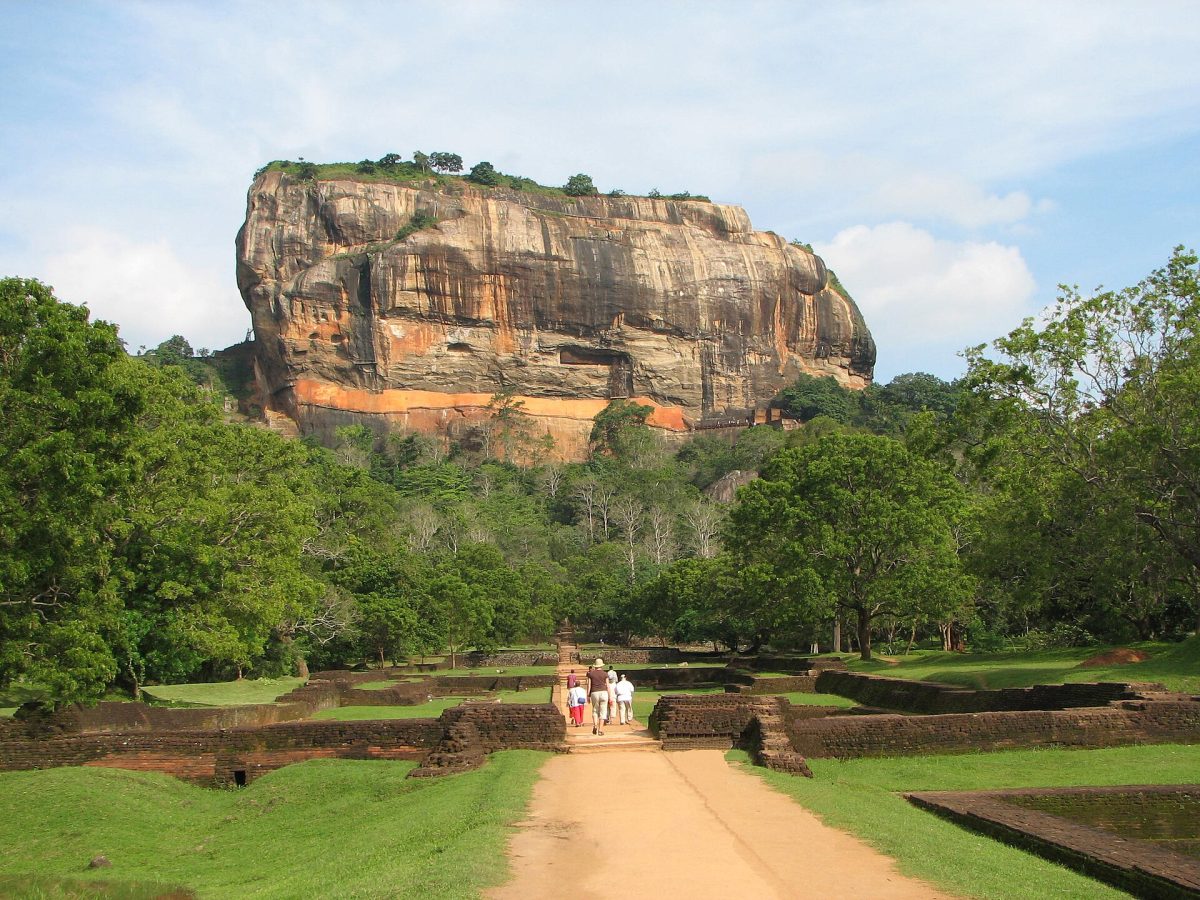
Photo: Bernard Gagnon, CC BY-SA 3.0
Sigiriya is one of those rare places where the past doesn’t just linger—it breathes. Rising abruptly from the emerald sprawl of Sri Lanka’s central plains, the massive rock formation might look like a geological accident at first glance. But this is no ordinary monolith. In the 5th century, King Kassapa chose its sheer, towering heights as the site for his fortress-palace, a defiant statement of power carved into the living stone. What remains today are ruins, yet even in their fragmented state, they carry the weight of ambition. Pools that once reflected the sky, terraced gardens where water flowed without pumps, and frescoes of celestial maidens whose identities are still debated—all of it speaks to a vision that was as audacious as it was fleeting.
The climb to the summit is less a hike than a journey through time. Narrow staircases, worn smooth by centuries of footsteps, wind past ancient retaining walls and overgrown terraces where monkeys now chatter in the branches. Halfway up, the famous Sigiriya Damsels appear—frescoes of women with flowing hair and delicate gestures, their faces half-erased by time. Were they goddesses, courtesans, or simply the imaginings of a long-dead artist? The air here is thick with the scent of damp earth and foliage, and every step echoes faintly against the rock, as if the mountain itself is whispering stories of the people who once ruled from its heights.
Yet Sigiriya is more than just its iconic rock. The sprawling gardens at its base are among the oldest landscaped parks in the world, a masterclass in ancient engineering. Water channels weave between symmetrical pools, their surfaces still mirroring the sky as they did fifteen hundred years ago. Fountains once danced to the rhythm of gravity alone, and artificial caves offered shade from the midday sun. Today, the gardens feel quietly abandoned, but there’s a strange beauty in their neglect—the way vines creep over stone, or how the light filters through the trees at a slant, as if time itself has slowed to match the pace of the place.
From below, the rock changes with the light. At dawn, it glows a soft pink; by midday, it’s a blinding white, almost too bright to look at. As the sun dips, the granite turns gold, and in the moonlight, locals say it seems to shimmer from within. It’s easy to see why myths cling to Sigiriya—there’s something undeniably magical about a place where the line between nature and human ingenuity blurs so completely.
The nearby village is small but alive in its own unhurried way. There are no high-rise hotels or crowded beaches, just narrow lanes where the scent of spices and freshly brewed tea hangs in the air. Tiny shops sell hand-carved masks, jewelry set with semiprecious stones, and tea leaves plucked from the surrounding hills. In the evenings, the sound of drums and flutes drifts through the streets, mingling with the hum of the jungle. It’s a place where the past and present coexist without fuss, as if the rhythms of ancient life have simply carried on, unbroken.
Sigiriya doesn’t reveal itself all at once. You might spend only a few hours here, but the memory of it lingers—the way the rock looms over the trees, the cool shade of the gardens, the quiet thrill of standing where kings once stood. This is a place that demands more than a quick glance. To really understand it, you have to wander, to listen, to let the weight of centuries settle over you. And if you’re lucky, you might just catch a glimpse of what drew people here so many lifetimes ago: the sense that you’re standing at the edge of something vast, something still unfolding.
Stay
0 placesNothing in this category yet — the catalogue is still growing.
All placesPlaces on the map
Marker colour follows the categoryClimate and weather
Detailed weather: Sigiriya- Average temperature
- 27 °C
- Precipitation per year
- 1503 mm
Average air temperature
°C
25
26
27
28
28
28
28
28
27
27
25
25
Jan
Feb
Mar
Apr
May
Jun
Jul
Aug
Sep
Oct
Nov
Dec