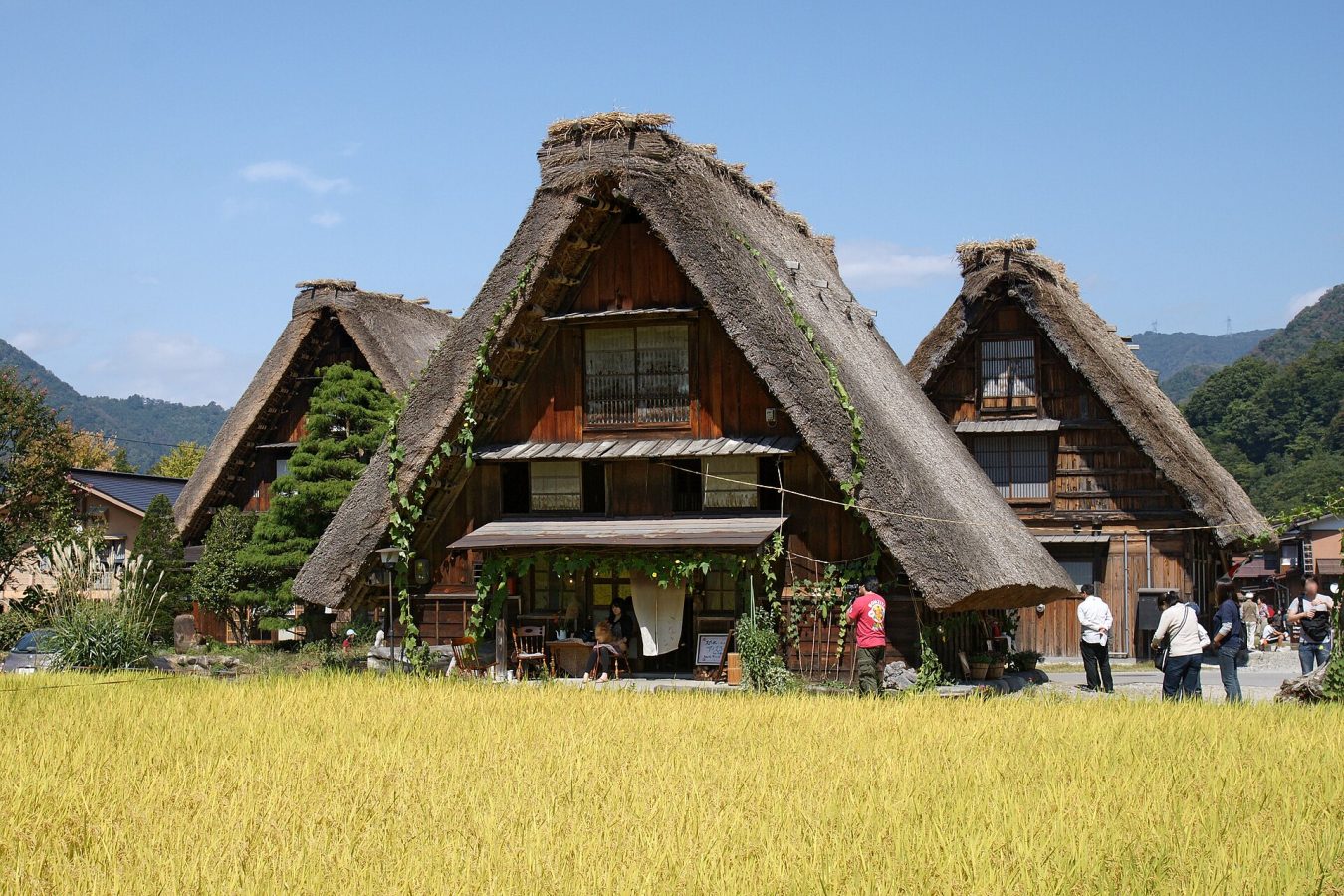
Shirakawa
Japan · 3 places
Photo: 663highland, CC BY 2.5
Shirakawa is the kind of place where time seems to soften, where the rhythm of life slows just enough to let you breathe. Tucked away in the mountains of Gifu Prefecture, deep in the heart of Honshu, it feels like stepping into a living woodblock print. The village is best known for its *gasshō-zukuri* farmhouses—tall, steep-roofed structures that resemble hands pressed together in prayer. Built to withstand heavy snowfall, some of these houses have stood for centuries, their thatched roofs curving gracefully against the sky. In 1995, UNESCO recognized the villages of Shirakawa-go and nearby Gokayama as World Heritage sites, but the real draw isn’t the designation. It’s the quiet, unhurried way of life that lingers here, as if the past hasn’t quite let go.
Walking through Shirakawa, you notice how the seasons shape everything. In summer, the rice paddies glow an impossible green, and the air hums with the sound of cicadas. Winter transforms the village into something out of a fairy tale—snow blankets the rooftops, muffling the world, and lanterns cast a warm glow along the narrow lanes. The people who live here still practice the old ways: weaving cloth, making *washi* paper by hand, brewing sake in small batches. Some of the farmhouses have been turned into museums, offering a glimpse into rural life during the Edo period. A few even welcome overnight guests, letting visitors sleep on tatami mats and wake to the scent of woodsmoke. But the real magic isn’t in the exhibits. It’s in the creak of floorboards underfoot, the faint smell of straw and timber, the way the wind moves through the mountains like a quiet conversation.
This isn’t the Japan of neon lights and bullet trains. There are no crowds here, no rush, no sense of urgency. Buses arrive only a few times a day, and the nearest train station is an hour away. Shirakawa exists at its own pace, and that’s part of its charm. It’s a place for those who want to step off the well-trodden path, to wander without a schedule, to see the country as it was long before skyscrapers and high-speed rail. In spring, cherry blossoms drift like pink snow over the rooftops. Autumn turns the forests into a blaze of red and gold. And in winter, the village becomes a luminous dreamscape, the snow glowing under the soft light of paper lanterns.
Despite its remoteness, Shirakawa doesn’t feel forgotten. Small cafés serve hearty local dishes—miso soup with mountain vegetables, grilled river fish, steaming bowls of *oden*. Tiny shops sell handmade crafts: indigo-dyed textiles, delicate *washi* paper, wooden toys carved by village artisans. There are even *onsen* nearby, where you can soak in hot springs after a long walk through the hills. Visitors who make the journey often say the same thing: this is a place where you can truly rest. Not just your body, but your mind. There’s no need to hurry, no checklist of sights to tick off. You can spend an afternoon sitting by the Shōgawa River, listening to the water rush over the stones, watching the light shift on the mountains. It’s the kind of quiet that makes you realize how little you actually need.
Eat & Drink
0 placesNothing in this category yet — the catalogue is still growing.
All placesPlaces on the map
Marker colour follows the categoryClimate and weather
Detailed weather: Shirakawa- Average temperature
- 12 °C
- Precipitation per year
- 1934 mm
Average air temperature
°C
-1
0
5
11
16
20
24
25
21
14
8
2
Jan
Feb
Mar
Apr
May
Jun
Jul
Aug
Sep
Oct
Nov
Dec


