- Home
- Azerbaijan
- Shaki
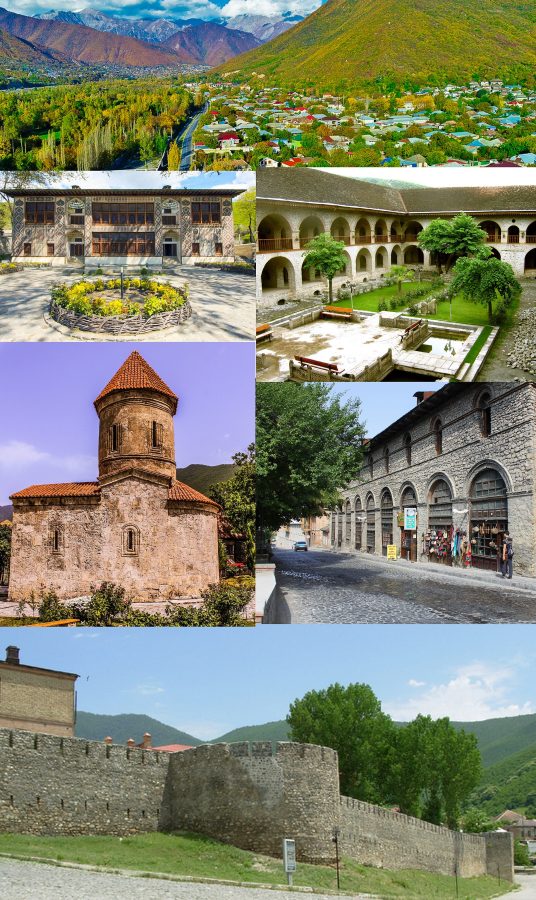
Shaki
Azerbaijan · 7 places
Photo: Sefer azeri, CC BY-SA 4.0
Sheki sits in the foothills of the Greater Caucasus, where streets curve around old wooden houses. Water trickles in irrigation channels, and vendors call out at the market. The caravanserai windows cast lacy shadows, lavash bread steams on griddles, and folk music drifts from teahouses.
History in layers
Ancient chronicles mark Sheki as a Silk Road stop. By the 18th century, it was the capital of the Sheki Khanate. The Khan’s Palace still stands, its walls covered in shebeke—stained-glass mosaics made without nails. Sunlight passes through them, scattering colored light across the floors.
In the old quarter, merchants once unloaded silk and spices. Artisans worked nearby, their tools clicking against wood and metal.
What you’ll find now
Workshops weave silk scarves the same way they have for centuries. Bakeries heat tandyr ovens to bake bread. The market sells pomegranates, walnuts, ceramics, and rounds of cheese with mountain herbs.
Sheki halva is a flaky pastry with nuts and honey. Stalls wrap it in paper while it’s still warm. You can eat it on a terrace, looking at the hills.
Beyond the town
Chestnut and walnut trees grow thick outside Sheki. Mineral springs bubble in the forest. In summer, the air is cool; in winter, snow covers the green valleys.
The village of Kish has one of the Caucasus’ oldest churches, built when the Albanian kingdom ruled here. There are waterfalls to hike to and trails to follow. Sometimes, the only sounds are birds and leaves.
Sheki doesn’t try to impress. There are no luxury hotels or big attractions. It’s a place for walking, talking over tea, and touching history that hasn’t faded.
Eat & Drink
0 placesNothing in this category yet — the catalogue is still growing.
All placesPlaces on the map
Marker colour follows the categoryClimate and weather
Detailed weather: Shaki- Average temperature
- 14 °C
- Precipitation per year
- 765 mm
Average air temperature
°C
3
3
7
13
18
22
25
25
20
14
8
5
Jan
Feb
Mar
Apr
May
Jun
Jul
Aug
Sep
Oct
Nov
Dec


