- Home
- Uzbekistan
- Sherabad
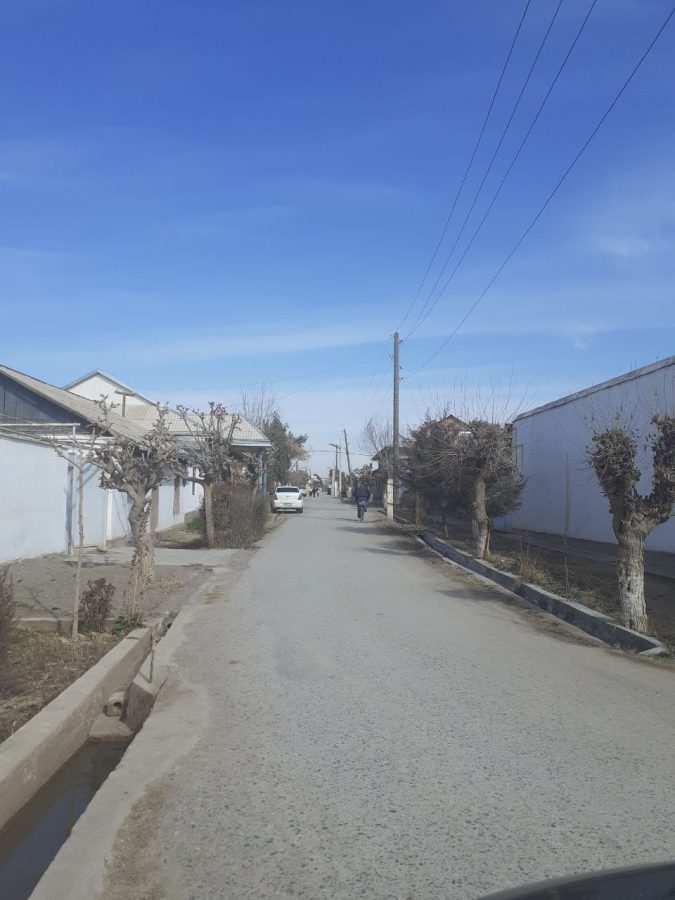
Sherabad
Uzbekistan · 1 place
Photo: Artem Abd, Public domain
Sherabad feels like a place where time has settled into a slower rhythm, much like the nearby Amu Darya River that drifts past without hurry. There are no crowded avenues or tourist crowds here, and that’s precisely what makes it special. The old part of town is a maze of narrow streets lined with weathered clay houses, their carved wooden doors hinting at stories from another era. The bazaars overflow with spices, dried fruits, and the kind of quiet bustle that belongs to everyday life, not postcards. Yet Sherabad isn’t some open-air museum—it’s a living, breathing town where tradition isn’t preserved behind glass but woven into the fabric of daily routines.
Located in southern Uzbekistan near the Afghan border, Sherabad has long been a crossroads of cultures and trade. Centuries ago, it was a stop on the Silk Road, where caravans laden with goods from India, China, and Persia would pause before continuing their journeys. Today, little remains of those days except fragments of old caravanserais, though the surrounding landscape holds echoes of even older history. Nearby, the ruins of Buddhist monasteries from the Kushan Empire still stand, a reminder that these lands were once part of a vast realm stretching from India to Central Asia.
Modern Sherabad is first and foremost an agricultural hub. The fertile soil yields cotton, figs, grapes, and pomegranates so sweet they taste like honey. The local bazaars groan under the weight of fresh produce, and in season, the air is thick with the scent of ripe fruit and warm bread straight from the tandyr. Summers here are relentless, the heat pressing down until even the shade feels heavy, while winters bring a crisp clarity, making the distant mountains seem close enough to touch. The town’s most famous export might be its pomegranates, but its real pride is the plov—slow-cooked with carrots, raisins, and a blend of spices that gives it a subtle sweetness. Locals insist it’s nothing special, just the way their grandmothers taught them, though visitors often disagree.
Life in Sherabad moves at its own unhurried pace. Mornings begin with tea and flatbread from the bazaar, and evenings are spent in courtyards where families gather under the rustling leaves of mulberry trees or the murmur of a fountain. Hospitality here is effortless; if you’re lucky, you might be invited to share a meal cooked in a massive cauldron over an open fire. Beyond the town, the landscape offers quiet surprises. The Sarykamysh Gorge, with its hidden springs and rocky pools, is a place where locals escape the heat, though calling it the "Uzbek Switzerland" is a stretch—its beauty is stark and rugged, not postcard-perfect. A short drive away, the ruins of Jarkurgan Fortress stand as a reminder of the region’s turbulent past, its crumbling walls glowing gold in the late afternoon light.
Sherabad isn’t a place for those seeking luxury or entertainment. There are no high-end hotels, trendy cafes, or shopping malls—just the steady pulse of a town that has chosen to remain itself. What it lacks in spectacle, it makes up for in authenticity. The quiet here isn’t the absence of noise but the presence of something deeper: the rhythm of a place where life hasn’t been polished for outsiders, where every conversation, every sunset over the old mosque’s minaret, feels like a glimpse into something real.
Stay
0 placesNothing in this category yet — the catalogue is still growing.
All placesPlaces on the map
Marker colour follows the categoryClimate and weather
Detailed weather: Sherabad- Average temperature
- 17 °C
- Precipitation per year
- 369 mm
- Average humidity
- 42 %
- Sunshine hours per day
- 9.8 h
- Time zone
- UTC+5 (GMT+5)
Average air temperature
°C
3
6
11
16
22
28
30
28
22
17
12
6
Jan
Feb
Mar
Apr
May
Jun
Jul
Aug
Sep
Oct
Nov
Dec


