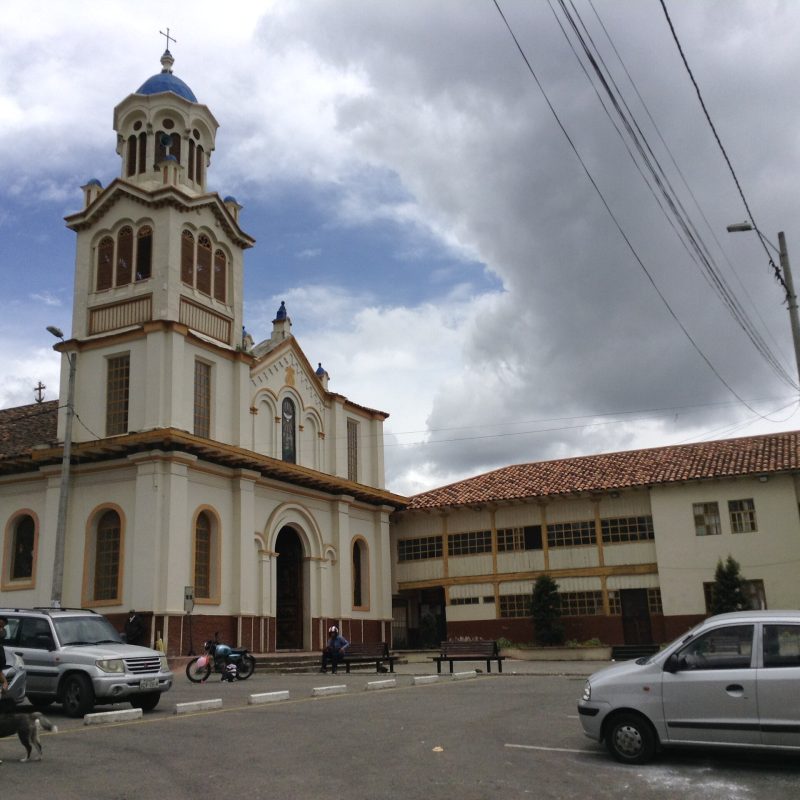
Weather overview
Sayausi sits in the Andean highlands of Ecuador, where the climate remains mild year-round but shifts noticeably between wet and dry periods. The warmest months—November and December—bring average temperatures around 15.3–15.7 °C, while the coolest stretch, from July to August, hovers closer to 13.9–14.2 °C. These variations are subtle, but the difference in rainfall is far more pronounced.
Unlike many destinations with distinct seasons, Sayausi’s weather is shaped by its elevation and proximity to the equator. The air stays crisp, with daytime highs rarely exceeding 23 °C even in the warmest months. Nights, however, can feel chilly, especially in August, when temperatures dip to 8.5 °C. The key to planning a visit lies in timing around the rain, not the temperature.
Temperature
Temperatures in Sayausi stay remarkably stable, with only a few degrees separating the warmest and coolest months. From January to May, averages linger between 15.1–15.6 °C, while the mid-year months—June through September—see a slight drop to 14.2–14.6 °C. The most noticeable shift occurs in August, when nights grow cooler and the daily range stretches from 8.5 °C at dawn to 20.4 °C by afternoon.
Daytime warmth peaks in November, with highs reaching 23.1 °C, but even then, evenings retain a refreshing coolness. The narrow temperature band means layers are useful year-round, though the real challenge is adjusting to the rapid changes between sun and shade. In Sayausi, a sunny morning can feel deceptively warm, while an overcast afternoon might call for a light jacket.
| Month | Minimum | Maximum |
|---|---|---|
| January | 10.6 | 22.1 |
| February | 10.8 | 22.1 |
| March | 10.8 | 21.7 |
| April | 10.8 | 21.4 |
| May | 10.8 | 21.2 |
| June | 10 | 20.5 |
| July | 9.4 | 19.9 |
| August | 8.5 | 20.4 |
| September | 8.8 | 21.5 |
| October | 10 | 22.5 |
| November | 10.1 | 23.1 |
| December | 10.9 | 22.5 |
Precipitation
Rainfall defines the rhythm of life in Sayausi, with a clear wet season running from February to May. During these months, downpours are frequent, often exceeding 200 mm per month. April is typically the wettest, with 222.8 mm of rain, while March and May follow closely behind. The dry season, though less pronounced, centers on September and October, when precipitation drops to 72.3–122.2 mm.
Even in the driest months, Sayausi rarely stays completely dry for long. Brief showers can occur at any time, but the heaviest rain tends to arrive in the afternoons, leaving mornings relatively clear. Travelers visiting in June or July will find a middle ground—less rain than the wet season but more than the driest months. The key is to pack for unpredictability, as even a sunny forecast can shift quickly in the Andes.
| Month | Precipitation |
|---|---|
| January | 164.4 |
| February | 221.5 |
| March | 217.7 |
| April | 222.8 |
| May | 214.8 |
| June | 163.2 |
| July | 154.1 |
| August | 122.6 |
| September | 72.3 |
| October | 122.2 |
| November | 98.1 |
| December | 171.9 |
What to pack
For a trip to Sayausi, clothing should prioritize versatility over bulk. During the wetter months—February to May—a waterproof jacket and quick-drying layers are essential, as rain can arrive suddenly and linger. Even in the drier months, mornings and evenings can feel cool, so a light sweater or fleece is useful, especially if you plan to explore early or after sunset.
Footwear matters in Sayausi, where uneven terrain and occasional mud make sturdy, water-resistant shoes a smart choice. In August or September, when nights dip to 8.5–8.8 °C, a warmer layer like a long-sleeve shirt or scarf can make evenings more comfortable. Regardless of the season, sunglasses and sunscreen are worth packing—high-altitude sun can be intense even on cooler days.
| Month | Wind speed |
|---|---|
| January | 2.4 |
| February | 2.4 |
| March | 2.2 |
| April | 2 |
| May | 2 |
| June | 2.3 |
| July | 2.5 |
| August | 2.3 |
| September | 2.4 |
| October | 2.3 |
| November | 2.3 |
| December | 2.3 |
