Ronda
Spain · 8 places
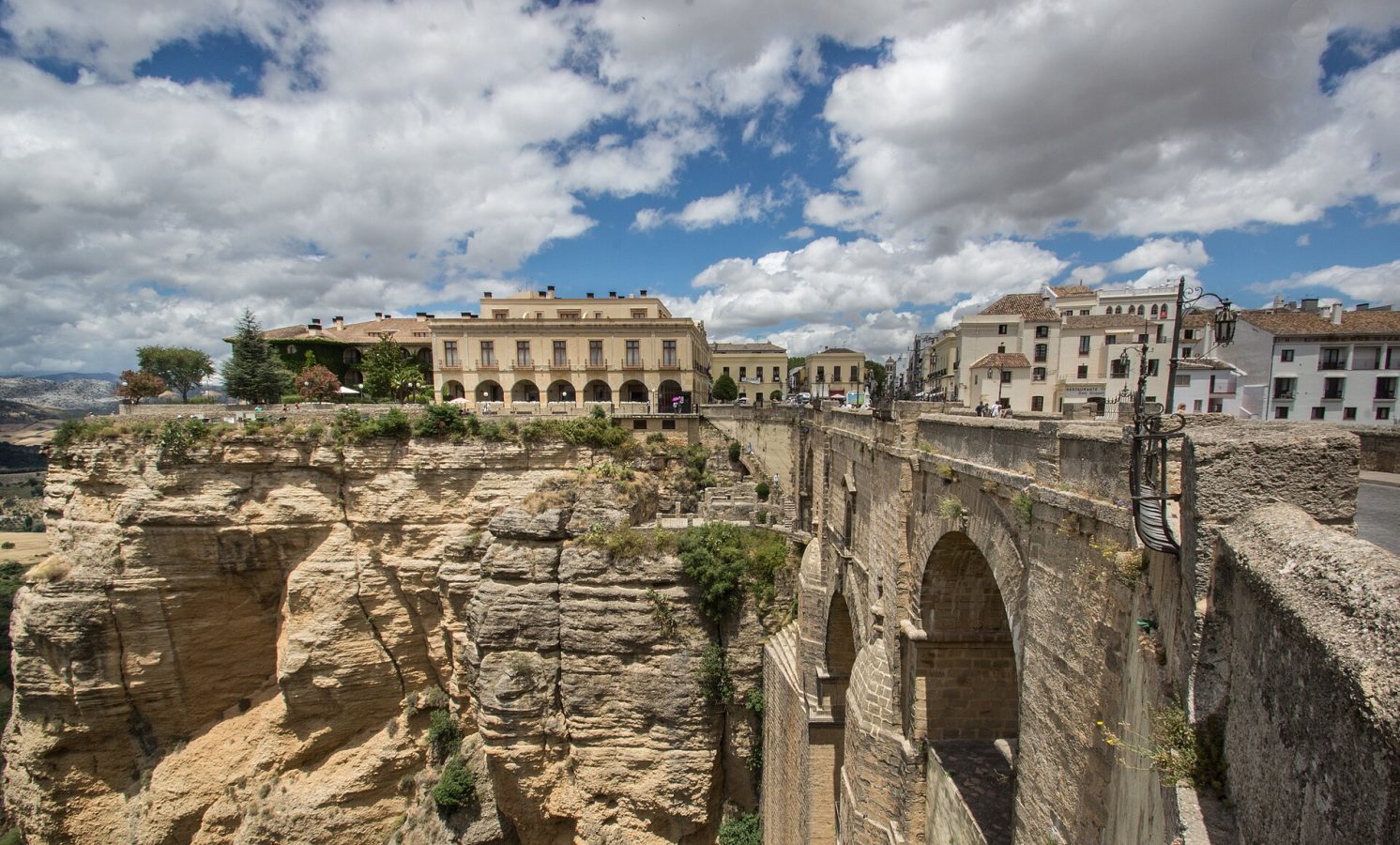
Photo: Pedro J Pacheco, CC BY-SA 3.0 es
Perched on the edge of a dramatic gorge, Ronda feels like a place that exists outside of time. The town is split in two by the sheer cliffs of the Tajo de Ronda, with the two halves connected by the Puente Nuevo, a bridge that seems to defy both gravity and common sense. Built in the 18th century, it wasn’t just an engineering marvel—it was a statement, a way to prove that beauty and practicality could coexist. Below, the Guadalevín River rushes through the ravine, while above, the landscape unfolds in rolling Andalusian hills, dotted with olive groves and vineyards. Standing on the bridge, it’s easy to imagine the debates that must have raged among the architects and laborers who built it, balancing ambition with the unforgiving terrain.
Ronda’s history stretches back millennia, with layers of civilizations leaving their mark. The Celts were here first, followed by the Romans, who left behind the ruins of a theater and baths on the outskirts of town. But it was the Moors who truly shaped Ronda, turning it into a cultural and military stronghold during the height of Al-Andalus. Their legacy lingers in the labyrinthine streets of La Ciudad, the old quarter, where whitewashed houses with wrought-iron balconies and hidden courtyards still follow traditions passed down through generations. The Baños Árabes, some of the best-preserved Moorish baths in Spain, offer a glimpse into daily life centuries ago—imagine merchants and scholars gathering here, the scent of orange blossoms drifting through the steam.
Yet Ronda isn’t just a relic of the past. It’s a living town with a rhythm all its own, far removed from the tourist crowds of Seville or Granada. Mornings start slowly, with locals gathering in Plaza del Socorro for coffee and conversation, while evenings bring the hum of guitars and the aroma of tapas from bars serving cured ham, olives, and local wine. The town is also synonymous with bullfighting—its 18th-century Plaza de Toros is one of the oldest in Spain, and the attached museum draws those curious about the controversial tradition. But for many, Ronda’s appeal lies elsewhere: in the quiet of its plazas, the dappled shade of orange trees, and that particular Andalusian light that turns everything golden in the late afternoon.
Beyond the town, the landscape beckons. Just a short walk from the center, hiking trails wind through the mountains, offering sweeping views of the gorge and the surrounding countryside. The Alamedrilla path descends to the river, where the Puente Nuevo appears from an unexpected angle, almost surreal against the rugged cliffs. For those who prefer a challenge, the Sierra de las Nieves Natural Park is a short drive away, a wild expanse of forests and peaks where eagles circle overhead and tiny villages cling to the hillsides. Even a leisurely stroll can lead to hidden spots—perhaps a bench overlooking the valley or a quiet corner where the only sound is the wind through the trees.
What makes Ronda special is the way it unfolds slowly, like a story you don’t want to rush. There’s no need to tick off sights or hurry from one landmark to the next. You might spend an afternoon wandering the old quarter’s narrow alleys, or simply sit on a bench at the edge of the gorge, watching the sunset paint the sky in shades of pink and amber. The town doesn’t try to impress—it doesn’t have to. What it offers instead is something rarer: a sense of authenticity, a quiet that feels almost forgotten, and the strange, comforting feeling that here, time moves at its own pace.
Eat & Drink
0 placesNothing in this category yet — the catalogue is still growing.
All placesPlaces on the map
Marker colour follows the categoryClimate and weather
Detailed weather: Ronda- Average temperature
- 17 °C
- Precipitation per year
- 333 mm
- Sunshine hours per day
- 9 h
Average air temperature
°C
7
9
11
15
19
24
28
27
22
18
11
8
Jan
Feb
Mar
Apr
May
Jun
Jul
Aug
Sep
Oct
Nov
Dec