- Home
- Republic of Benin
- Porto-Novo

Porto-Novo
Republic of Benin · 8 places
Photo: Élisée.Adad, CC BY-SA 4.0
Porto-Novo
Porto-Novo moves at its own pace. The city doesn’t rush to reveal itself. It wears its official status lightly, as if the title were an afterthought. The streets unfold slowly, lined with buildings where peeling paint tells stories, and neighbors greet each other with nods. The city rests along Lake Nokoué, where water is a way of life. Fishermen glide through morning mist in wooden canoes, and by evening, the lake mirrors flickering lights like fallen stars.
Founded in the 17th century as a hub for the transatlantic slave trade, Porto-Novo carries history without spectacle. The past lingers in the details. Colonial mansions with balconies stand beside clay huts where meals are cooked over open flames. Dantokpa Market, one of West Africa’s largest, is a place of scent and sound. Women balance fabric on their heads, while stalls overflow with spices and dried fish. Bargaining voices fill the air.
Modernity here isn’t what outsiders expect. There are no skyscrapers. The internet flickers, but something else thrives—an unforced atmosphere. Tradition is lived, not performed. Vodun drums echo from temples. People wear traditional garments daily. Locals may share stories if they sense curiosity, but they won’t insist.
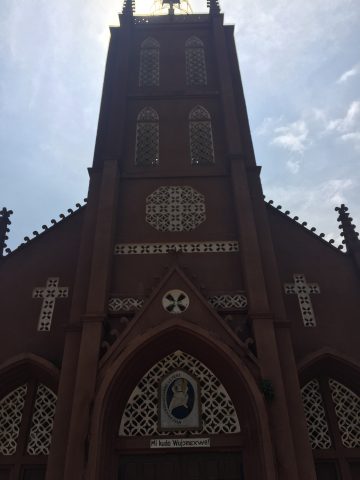
Porto-Novo is a city of contrasts. A Catholic cathedral stands near sacred vodun sites where rituals have continued for centuries. In parks, teenagers play soccer with intensity. The city doesn’t try to impress. It offers small moments: a stranger’s smile, the shade of a tree, the lap of water against the dock.
Have you ever felt a place stay with you long after leaving?
Porto-Novo won’t transform you in a few days. It might leave an impression—soft as the echo of a drum, lingering after you’ve gone.
See & Do
8 places


Places on the map
Marker colour follows the categoryClimate and weather
Detailed weather: Porto-Novo- Average temperature
- 28 °C
- Precipitation per year
- 1209 mm
- Sunshine hours per day
- 5.6 h
Average air temperature
°C
28
29
29
29
29
27
26
26
27
27
29
29
Jan
Feb
Mar
Apr
May
Jun
Jul
Aug
Sep
Oct
Nov
Dec


