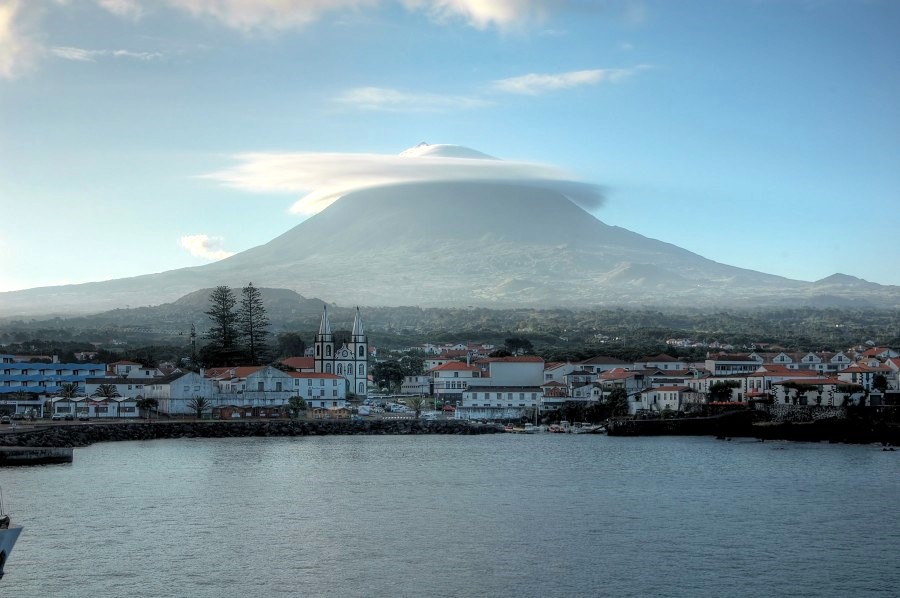
Magdalene Island
Portugal · 5 places
Photo: Christer Johansson, CC BY-SA 2.5
Madalena clings to the coast of Pico, the Azores’ second-largest island. The town is built from black basalt; the same stone paves its narrow streets, lines the vineyards, and walls off the wind. Above it all stands Pico Mountain—locals call it *montanha* because it dictates the weather, the crops, even the mood. Sun breaks through the clouds, then fog rolls in, softening the edges of the world within minutes.
The vineyards around Madalena are UNESCO-protected. Small, walled plots of black stone shield the vines from salt spray and Atlantic winds. The white wines taste of minerals, as if the volcano has seeped into every grape. In autumn, the air smells of ripening fruit. Family-run cellars let you taste the new wine straight from the barrel, still young and fizzing.
The harbor is the town’s pulse. Fishing boats leave at dawn for tuna. Whale-watching tours set off later, when the sea is calmer. Along the waterfront, restaurants serve grilled fish with lemon, octopus in *vinha-d’alhos* sauce, and sea urchin soup. By evening, the promenade fills with people—locals walking, visitors watching the lights shimmer on the water.
There are no large hotels here. Guesthouses feel like staying with friends. Cafés smell of fresh bread and coffee in the morning. On weekends, the square near the church hosts live music. The market sells homemade cheeses, fruit preserves, and woven baskets.
In summer, divers come for the coral reefs and shipwrecks. Winter slows everything down—the streets quieter, the wind sharper.
Madalena doesn’t rush you. People greet you as they pass. The landscape hasn’t changed in generations. The air always carries salt. You can wander the shore, watching how light shifts on the mountain’s slopes. Or explore lava caves inland. Or climb the volcano itself, where the whole archipelago stretches beneath you.
Eat & Drink
0 placesNothing in this category yet — the catalogue is still growing.
All placesPlaces on the map
Marker colour follows the categoryClimate and weather
Detailed weather: Magdalene Island- Average temperature
- 18 °C
- Precipitation per year
- 2071 mm
Average air temperature
°C
15
15
15
15
17
19
22
23
22
20
18
16
Jan
Feb
Mar
Apr
May
Jun
Jul
Aug
Sep
Oct
Nov
Dec


