Lubutu
Democratic Republic of the Congo · 7 places
Photo: Baudry2020, CC BY-SA 4.0
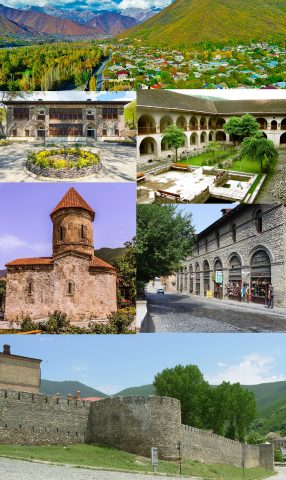
Lubutu is one of those places that time seems to have forgotten, a quiet settlement tucked away in the dense forests and rolling hills of eastern Democratic Republic of the Congo. There are no bustling avenues, towering buildings, or crowds of visitors here—just the steady hum of life unfolding at its own pace. The air is thick with the sounds of the jungle: birds calling from the treetops, the occasional rumble of a truck struggling along the potholed roads, and the distant murmur of voices in a language that has been spoken here for generations. This is Congo stripped of pretense, a place where the rhythms of nature and the slow, deliberate routines of its people shape every day.
The town’s origins trace back to the early 20th century, when it served as a colonial administrative outpost under Belgian rule. Vestiges of that era linger in the crumbling facades of old one-story buildings, their peeling plaster and rusted French signs hinting at a past that no one here is in a hurry to erase. At the center of Lubutu stands a half-ruined church, its moss-covered walls and crooked steeple bearing the weight of decades. The locals treat it with quiet reverence, though services are rare—only when a priest makes the long journey from elsewhere does the building come briefly back to life.
Daily existence in Lubutu revolves around the market, which springs to life each morning in the town square. Here, under the shade of makeshift awnings, you can find everything from bunches of ripe bananas and cassava roots to freshly caught fish from the Lukuga River. The trading is unhurried, more about conversation than commerce, with prices often negotiated based on little more than a shared joke or a seller’s whim. By midday, when the sun beats down relentlessly, the market winds down, and the town slips into a drowsy lull, broken only by the occasional bark of a dog or the creak of a wooden cart.
Beyond the town, the landscape shifts between dense forests and open savannas, where rivers carve winding paths through the hills. The wilderness here is alive with wildlife—monkeys chatter in the trees, antelope dart through the undergrowth, and elephants, though rarely seen, leave their tracks in the mud. The Lukuga River is the lifeblood of the area, its waters teeming with fish that sustain the local diet. Fishermen wade into the shallows at dawn, casting nets or checking traps, while in the rainy season, the river swells, flooding the lowlands and turning the roads into impassable quagmires. Life slows even further then, as if the land itself is taking a breath.
Despite its isolation, Lubutu is a vital thread in the region’s fragile infrastructure. The town sits along one of the few roads connecting eastern Congo to the rest of the country—a rough, pitted track that sees more trucks laden with goods than passenger vehicles. Motorbikes weave between the ruts, carrying everything from sacks of cassava to live goats, while the occasional bus, packed beyond capacity, lurches along the route. The road is treacherous, especially during the rains, when mud and deep gullies turn it into an obstacle course. Yet for many here, it’s the only link to the outside world, a tenuous lifeline that keeps Lubutu from being completely cut off.
There are no luxury hotels or restaurants in Lubutu, and visitors are a rarity. Those who do make the journey come not for comfort, but for the chance to experience a place that exists on its own terms. The town doesn’t perform for outsiders; it simply endures, its streets quiet, its nights dark and star-strewn. The stars here feel closer, untouched by the glow of city lights, and the silence is so complete it almost hums. Mornings bring the same unhurried rhythm: the market stirring to life, voices rising in greeting, the slow shuffle of feet on dusty paths. Lubutu won’t change for anyone, and perhaps that’s why it lingers in the memory long after you’ve left.
See & Do
7 places
Places on the map
Marker colour follows the categoryClimate and weather
Detailed weather: Lubutu- Average temperature
- 26 °C
- Precipitation per year
- 836 mm
Average air temperature
°C
26
27
27
26
26
26
25
25
25
25
25
25
Jan
Feb
Mar
Apr
May
Jun
Jul
Aug
Sep
Oct
Nov
Dec