Lamu
Kenya · 6 places
Photo: MysteryBee, CC BY-SA 2.0
Lamu
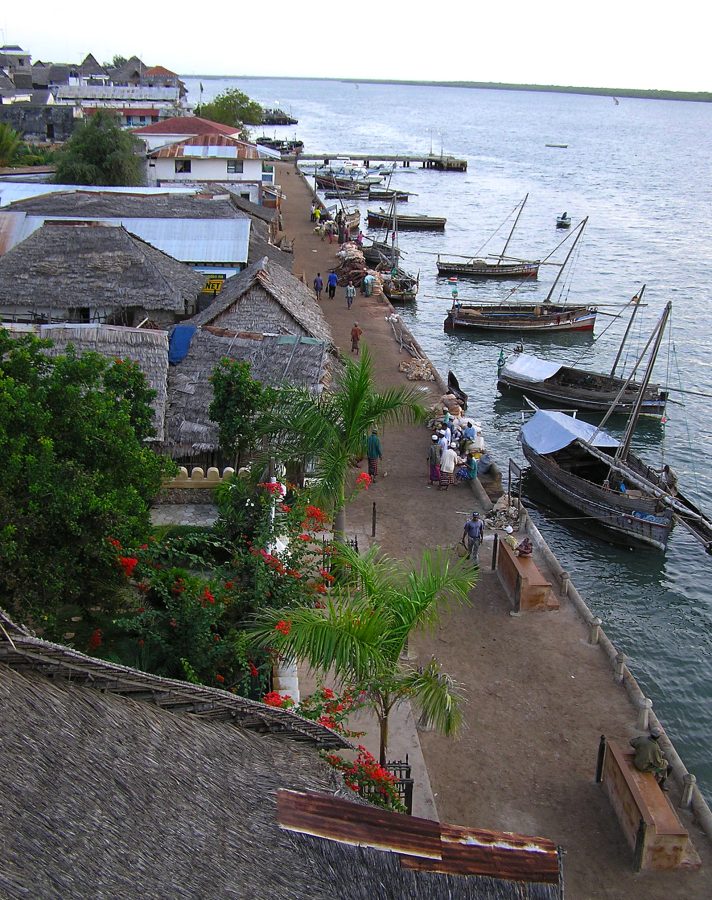
Time slows here. The island town moves to its own rhythm, untouched by the rush of the modern world. Narrow lanes, paved with smooth coral stone, wind between whitewashed houses. Behind them lie quiet inner gardens where mango trees cast shadows over bougainvillea and cats doze in the sun.
There are no cars—just donkeys carrying firewood or sacks of rice, their hooves clicking against the stone. People greet each other with easy familiarity, even if they’ve already crossed paths half a dozen times that day.
Every doorway, every worn step, tells a story of trade, migration, and the blending of cultures along the Swahili coast.
History
The town dates to the 14th century, when it was a port connecting Africa, Arabia, and India. Merchants brought spices, silks, languages, religions, and architectural styles. Coral-stone mosques stand beside houses with Indian-influenced balconies. Arabic calligraphy on doorframes appears alongside African patterns in the woodwork.
For centuries, Lamu was a hub in the East African slave trade. That history isn’t hidden—it’s part of the town’s fabric, acknowledged as something that shaped what Lamu is now.
Daily Life
Mornings begin with the call to prayer from the minarets. Fishermen return with tuna, octopus, and crabs. Women in kikois balance baskets of fruit and spices on their heads.
The market sells fresh coconut milk from the shell. Silver jewelry is hammered into shape before your eyes. Spices still carry the warmth of the sun.
By evening, taarab music fills the air—a blend of Arabic melodies and African rhythms, played on oud and drums. People gather in courtyards, swaying or sitting in silence, watching the stars appear over the ocean.
Beyond the Town
Empty beaches stretch along the coast, their white sand meeting turquoise waves. Mangrove forests and coconut groves teem with life—monkeys chatter in the trees, kingfishers dart between branches.
From July to September, humpback whales pass by on their migration. Locals guide visitors through the mangroves in dugout canoes or take them on boat safaris along the coast. Some share tales of spirits said to linger in the old houses.
Lamu is a place where you can step into a slower way of living, one that has endured for centuries.
Stay
0 placesNothing in this category yet — the catalogue is still growing.
All placesPlaces on the map
Marker colour follows the categoryClimate and weather
Detailed weather: Lamu- Average temperature
- 27 °C
- Precipitation per year
- 901 mm
Average air temperature
°C
28
28
29
28
27
27
26
26
26
27
28
28
Jan
Feb
Mar
Apr
May
Jun
Jul
Aug
Sep
Oct
Nov
Dec


