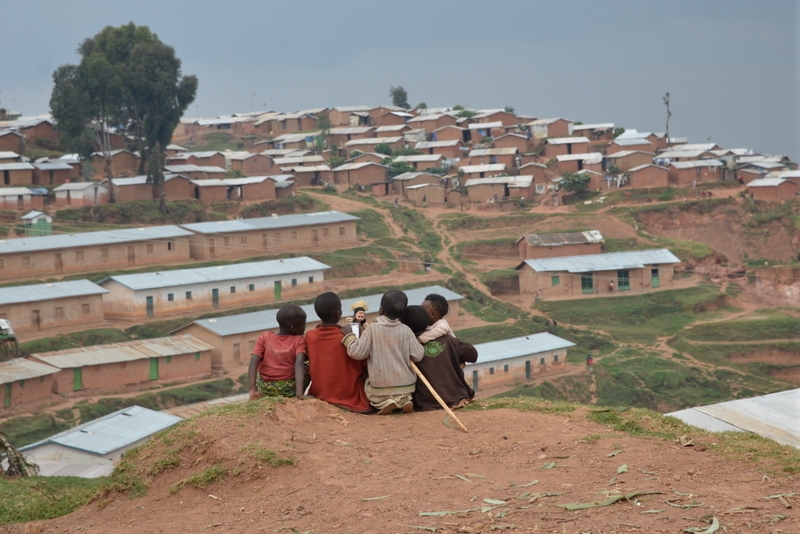
Weather overview
The weather in Kiziba refugee camp remains mild year-round, with temperatures rarely straying far from 20–21 °C. The climate here is shaped by its high-altitude location in western Rwanda, where warm days and cooler nights are the norm. While the differences between months are subtle, the seasons still bring noticeable shifts in rainfall and humidity.
In Kiziba refugee camp, the dry periods stretch from January to February and again from June to July, offering the most stable conditions. The wettest months—April, May, and November—bring frequent showers, which can make outdoor activities less predictable. Travelers should plan accordingly, especially if mobility is a concern.
Temperature
Temperatures in Kiziba refugee camp stay within a narrow range, with daytime highs typically reaching 24–25 °C and nighttime lows dipping to 17–18 °C. The warmest period falls between May and September, when the mercury occasionally climbs to 25.5 °C, though the difference from other months is modest.
Even during the cooler months, such as June and July, nights in Kiziba refugee camp rarely drop below 17 °C, so heavy layers are unnecessary. The most consistent warmth occurs in May, when temperatures hover around 21 °C on average. For those sensitive to temperature swings, the slight variations between seasons are unlikely to pose a challenge.
| Month | Minimum | Maximum |
|---|---|---|
| January | 17.7 | 24.5 |
| February | 17.9 | 24.4 |
| March | 18 | 25 |
| April | 18.1 | 24.9 |
| May | 18.3 | 25.5 |
| June | 17.6 | 25.2 |
| July | 17.4 | 25.3 |
| August | 17.6 | 25.5 |
| September | 17.5 | 25.1 |
| October | 17.8 | 25.3 |
| November | 17.9 | 24.2 |
| December | 17.8 | 24.4 |
Precipitation
Rainfall in Kiziba refugee camp follows a clear seasonal pattern, with two distinct wet periods. The heaviest rains arrive in April and May, when monthly totals exceed 250 mm, often bringing prolonged downpours. A second, shorter rainy season emerges in November, with precipitation around 178 mm.
The driest months—July and January—see far less rain, with totals dropping to 45 mm and 71 mm, respectively. Between these extremes, Kiziba refugee camp experiences moderate rainfall in March, September, and October, making these months a middle ground for those seeking to avoid both heavy rains and complete dryness.
| Month | Precipitation |
|---|---|
| January | 71.4 |
| February | 68.8 |
| March | 130.8 |
| April | 255.9 |
| May | 250.7 |
| June | 99.5 |
| July | 45.6 |
| August | 107.9 |
| September | 182.3 |
| October | 157.9 |
| November | 178.2 |
| December | 142.3 |
What to pack
For visits to Kiziba refugee camp during the dry months of January, February, June, or July, lightweight clothing is ideal. A light jacket or sweater will suffice for cooler evenings, while breathable fabrics help during the day. Since rain is rare in these periods, waterproof gear can be left behind.
Travelers arriving in April, May, or November should prepare for frequent showers. A compact umbrella or a waterproof jacket is essential, along with quick-drying footwear. Even during the wetter months, temperatures remain mild, so layers are more about comfort than warmth. A small backpack for rain gear will prove useful for day trips around Kiziba refugee camp.
| Month | Wind speed |
|---|---|
| January | 2.6 |
| February | 2.4 |
| March | 2.4 |
| April | 2.4 |
| May | 2.7 |
| June | 2.9 |
| July | 3 |
| August | 2.8 |
| September | 2.6 |
| October | 2.7 |
| November | 2.3 |
| December | 2.2 |
