- Home
- The Netherlands
- Kinderdijk
Kinderdijk
The Netherlands · 4 places
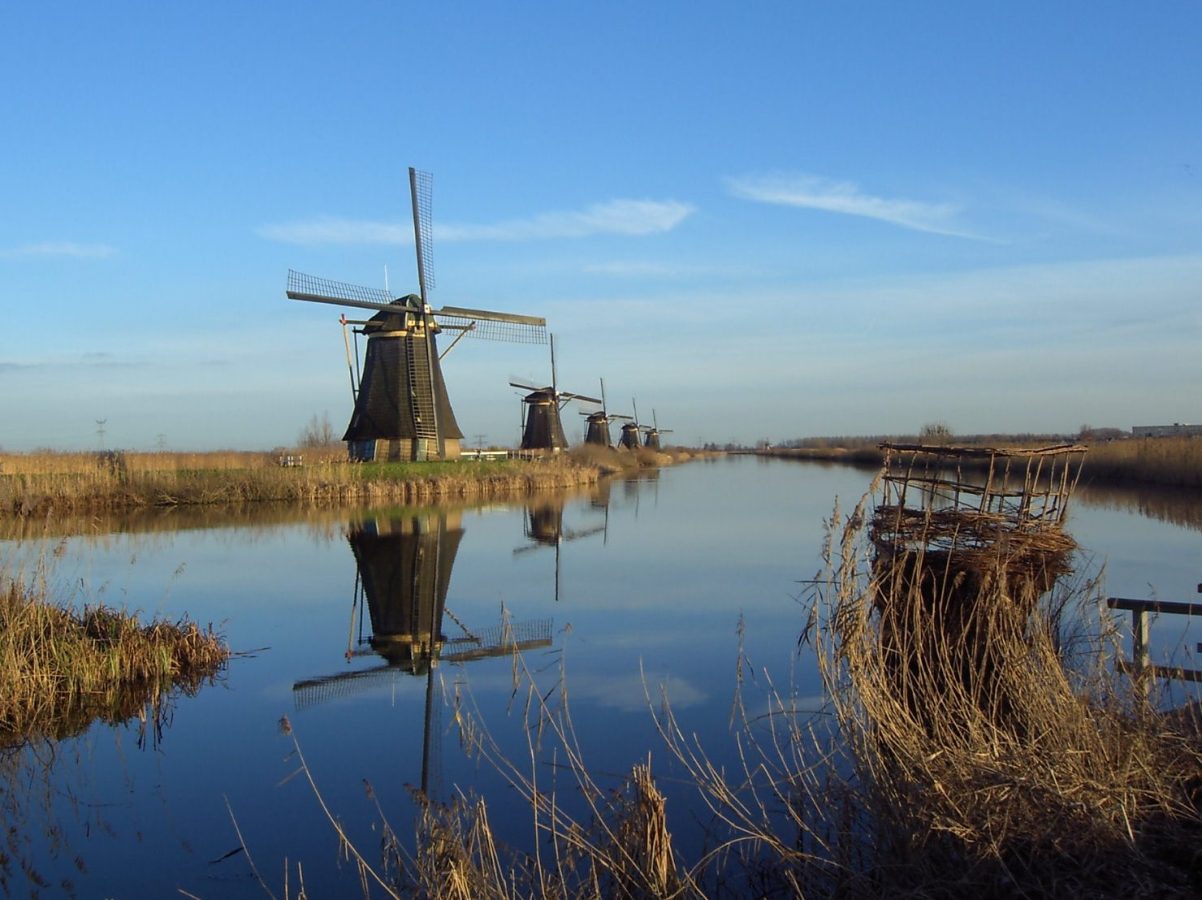
Photo: Lucas Hirschegger, CC BY-SA 3.0
Kinderdijk is where the Netherlands reveals itself in its most iconic form. Eighteen windmills stand in quiet formation along the rivers Lek and Noord, their sails turning lazily against the vast, flat horizon. Built in the 18th century, they weren’t just symbols of Dutch ingenuity—they were practical tools, part of a living system that kept the land dry and habitable. Even now, they still serve their original purpose, though not as urgently as they once did. The scene feels timeless, yet entirely real, as if the past and present have settled into an unspoken agreement here.
This is a place shaped by the constant battle against water. The canals, dikes, and sluices all tell the same story: one of adaptation, where every inch of land had to be claimed and defended. The windmills, once operated by hand, pumped water from the low-lying polders, turning marshland into fertile ground. Walking or cycling along the narrow paths, you can watch their blades turn, slow and deliberate, a reminder that nature has always dictated the terms here. On clear days, their reflections in the water create a perfect symmetry; when the sky is overcast, the landscape takes on a moody depth, the gray of the clouds merging with the gray of the water, leaving the windmills as the only splash of color.
Despite its fame, Kinderdijk hasn’t lost its quiet, unhurried rhythm. There’s no city bustle, no sense of being rushed along by crowds. The locals go about their lives, barely glancing at the visitors who come and go. A small museum offers a glimpse into how the water management system worked, and stepping inside one of the mills reveals the simplicity—and brilliance—of the design. Wooden gears, thick ropes, narrow staircases: everything speaks of the effort and ingenuity it took to tame this land. Occasionally, millers demonstrate how the mechanisms were operated by hand, making it clear why these structures were considered engineering marvels in their time.
The beauty of Kinderdijk shifts with the seasons. In spring, the fields turn a soft green, and the canals swell with meltwater, making the windmills appear even more serene. Summer brings more visitors, but there’s always a quiet spot to sit by the water and listen to the creak of the wooden frames. Autumn paints the landscape in gold, while winter lends the scene a stark, almost solemn grandeur. No matter when you visit, Kinderdijk feels like a place where history isn’t just preserved—it’s still alive, breathing alongside you.
Eat & Drink
1 place
Places on the map
Marker colour follows the categoryClimate and weather
Detailed weather: Kinderdijk- Average temperature
- 12 °C
- Precipitation per year
- 977 mm
- Average humidity
- 80 %
- Sunshine hours per day
- 7.7 h
- Time zone
- UTC+2 (GMT+2)
Average air temperature
°C
5
6
8
10
14
18
18
19
17
13
8
6
Jan
Feb
Mar
Apr
May
Jun
Jul
Aug
Sep
Oct
Nov
Dec