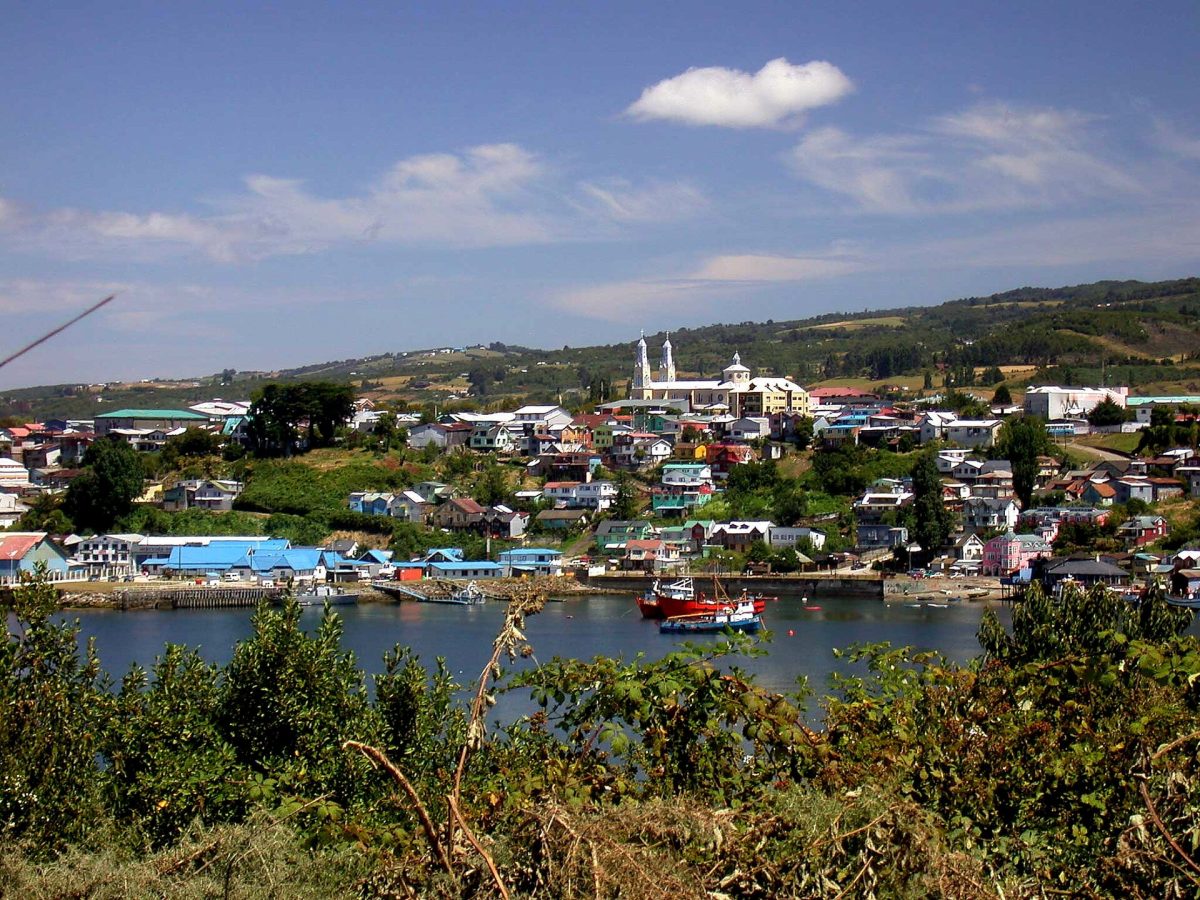
Castro
Chile · 6 places
Photo: Claudioarzola, CC BY-SA 3.0
Castro feels like a place where time moves differently. Perched on the edge of Chiloé Island, it carries the weight of history in its wooden churches, the weathered palafitos on stilts, and the stories passed down through generations. The town isn’t large, but its rhythm is unmistakable—slow, deliberate.
The heart of Castro is its markets, where women in traditional Chilote dresses sell seafood straight from the gulf. The air smells of smoked salmon, mussels steaming in their shells, and Chilote potatoes roasted in clay pots. Locals speak of creatures lurking in the forests and coastal caves, their legends part of daily life. During festivals, the streets fill with music and dance, costumes bright against the mist.
Life here revolves around the sea. Fishermen mend their nets by the docks, while small boats bob in the harbor, ready to set out at dawn. The food includes centolla crab, oysters plucked from the rocks, and curanto, a stew cooked underground with hot stones. Meals stretch long, with people sharing stories as the tide shifts.
Beyond the town, Chiloé unfolds in rolling hills, forests, and hidden coves where sea lions rest on the rocks. The coastline invites long walks, and dolphins sometimes appear in the waves. In the national parks, the trees stand tall, silent.
Castro isn’t for those who want luxury. It’s for travelers who notice the light on the water at dusk, the warmth of a café with strong coffee and a view, the smile of a fisherman who’s seen the same sunrise many times. The island doesn’t ask for attention; it waits.
Stay
0 placesNothing in this category yet — the catalogue is still growing.
All placesPlaces on the map
Marker colour follows the categoryClimate and weather
Detailed weather: Castro- Average temperature
- 10 °C
- Precipitation per year
- 1220 mm
- Sunshine hours per day
- 5.1 h
Average air temperature
°C
15
15
12
10
9
7
6
7
8
10
12
14
Jan
Feb
Mar
Apr
May
Jun
Jul
Aug
Sep
Oct
Nov
Dec


