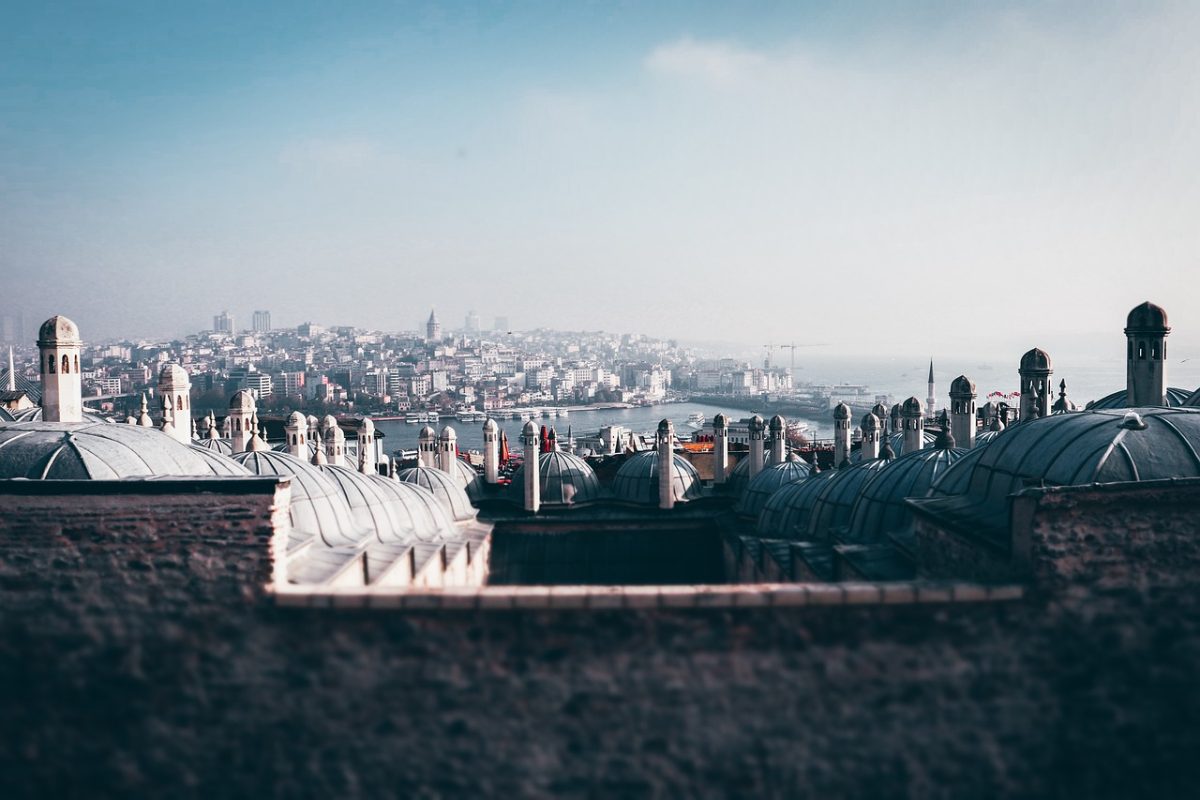
Weather overview
Istanbul’s weather shifts gently through the year, offering distinct seasons without extreme swings. Winters in Istanbul are mild but damp, with January and February bringing the coolest days, often around +6.5 °C. The city rarely freezes, though mornings can feel crisp, especially near the water.
From March, Istanbul begins to warm, and by May, the air settles into a comfortable +17.7 °C, making it one of the most pleasant times to explore. Summers stretch from June to August, with temperatures peaking at +29.7 °C in August, though the breeze off the Bosphorus keeps the heat from feeling oppressive. Autumn arrives in September, cooling gradually until December, when rain becomes more frequent.
Temperature
The temperature in Istanbul follows a steady rhythm, with winters hovering between +3.4 °C and +9.6 °C in February, the coldest month. Snow is rare, but occasional chilly spells can make outdoor walks feel brisk. By April, the city warms to +12.9 °C, and the days grow longer, with sunlight stretching to 6 hours a day.
Summer in Istanbul is warm but not scorching, with July and August averaging +25.1 °C to +25.3 °C. Evenings remain mild, rarely dropping below +20.9 °C, which makes dining by the water particularly enjoyable. September marks the start of a gentle cooldown, with temperatures sliding back to +21.3 °C, while November brings a sharper drop to +12.1 °C, signaling the return of cooler weather.
| Month | Minimum | Maximum |
|---|---|---|
| January | 3.8 | 9.2 |
| February | 3.4 | 9.6 |
| March | 5.1 | 12.2 |
| April | 8.7 | 17.1 |
| May | 13.1 | 22.2 |
| June | 17.9 | 27 |
| July | 20.6 | 29.6 |
| August | 20.9 | 29.7 |
| September | 16.9 | 25.6 |
| October | 13.2 | 20.5 |
| November | 8.7 | 15.5 |
| December | 5.5 | 11 |
Precipitation
Rain in Istanbul is spread throughout the year, though the pattern shifts with the seasons. The wettest months are December and January, when rainfall reaches up to 100 mm, often in steady drizzles rather than heavy downpours. October and November also see increased rain, with October recording 85 mm, which can make sightseeing a bit damp.
From May to August, Istanbul enters its driest period, with rainfall dropping to as low as 22.5 mm in July. Even when showers do occur, they’re usually brief, leaving plenty of time to explore. April and September offer a balance, with moderate rain and comfortable temperatures, making them ideal for those who prefer to avoid both crowds and heavy downpours.
| Month | Precipitation |
|---|---|
| January | 74.3 |
| February | 73.7 |
| March | 65.8 |
| April | 47 |
| May | 28.7 |
| June | 28.7 |
| July | 22.5 |
| August | 28.5 |
| September | 43.3 |
| October | 85.1 |
| November | 78.7 |
| December | 100.6 |
What to pack
For a winter trip to Istanbul, pack layers to adapt to the cool, damp weather. A warm coat is useful for January and February, when temperatures can dip to +3.4 °C, but you’ll also want lighter sweaters for milder days. Waterproof shoes are a good idea, as rain is common, and an umbrella will help navigate the occasional shower.
Spring and autumn in Istanbul call for versatile clothing. In April or October, temperatures range from +8.7 °C to +20.5 °C, so a mix of long sleeves, light jackets, and scarves will keep you comfortable. Summers are warm, so breathable fabrics like linen or cotton are ideal for June through August, when the heat peaks at +29.7 °C. Don’t forget sunglasses and sunscreen, as the sun can be strong even on breezy days.


