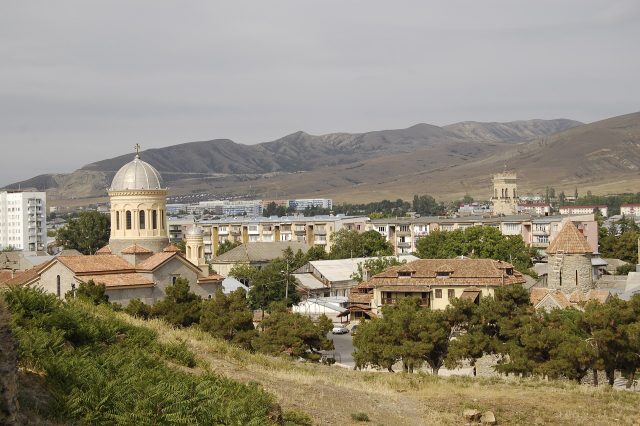
Tassili n'Ajjer
Algiers · 8 places
Photo: magharebia, CC BY 2.0
Illizi sits where the Sahara’s endless dunes soften into the rocky foothills of the Tassili n’Ajjer, a place where the air carries the scent of sunbaked stone and the horizon stretches into a shimmering mirage. This isn’t a city of crowded streets or polished tourist attractions—it moves to the slow, deliberate rhythm of the desert, where time isn’t measured in hours but in the shifting light over the dunes. Few travelers make it this far south, and those who do come not for comfort, but for the quiet thrill of standing at the edge of the known world, where civilization thins into sand and silence.
Life here follows the desert’s rules. Mornings begin with the first light, when the minaret’s shadow still stretches across the dusty streets, and the heat hasn’t yet turned the day into an endurance test. By midday, the sun forces a pause—shops close, conversations slow, and even the stray dogs seek shade. But when evening falls, the air cools, the stars emerge with startling clarity, and the town comes alive again. In the central square, old men play dominoes under palm-frond awnings while women in vibrant dresses carry clay jugs of water past low, ochre-colored houses that seem to rise from the earth itself. There’s no rush, no urgency—just the steady, unhurried pulse of a place that has always been this way.
Illizi is the gateway to one of the Sahara’s most haunting landscapes. Just beyond the town, the Tassili n’Ajjer plateau holds a secret: thousands of ancient rock paintings etched into the sandstone, depicting a world that no longer exists. Giraffes, elephants, and hunters with bows move across the stone as if frozen in time, proof that this land was once a savanna teeming with life. Today, travelers come to trace the paths of the nomads who left these marks, to sleep under the stars in makeshift camps, and to listen as local Tuareg guides share stories passed down through generations. The desert here feels alive with history, as if the past isn’t buried but simply waiting beneath the surface.
The town’s market is a world away from the sterile aisles of supermarkets. Under the open sky, vendors sell camel wool blankets, dates still dusted with desert sand, and silver jewelry hammered into intricate patterns. Bargaining isn’t just expected—it’s part of the ritual, a dance of offers and counteroffers that can stretch for minutes or even hours. Visitors usually stay in small guesthouses or with local families, where meals are simple but unforgettable: couscous steaming with lamb, flatbread baked in the embers of a fire, and endless cups of sweet mint tea, the universal language of hospitality. There’s no menu, no rush—just the food, the conversation, and the slow realization that this is how life has always been lived here.
Illizi doesn’t demand anything of you. There’s no itinerary to follow, no must-see sights clamoring for attention. The desert sets the pace, and the town obeys. You might spend an afternoon on a rooftop, watching the sun sink behind the dunes, turning the sand into liquid gold. Or you might set out on a multi-day trek, where the only landmarks are the stars and the wind’s direction. Either way, the place leaves its mark—not in grand monuments or Instagram-worthy moments, but in the quiet understanding that you’ve touched a corner of the world where time moves differently, where the land remembers what humans have forgotten, and where you, for a little while, are just a guest in its vast, silent story.
See & Do
All of them
Stay
All of themPlaces on the map
Marker colour follows the categoryClimate and weather
Detailed weather: Tassili n'Ajjer- Average temperature
- 26 °C
- Precipitation per year
- 10 mm
- Sunshine hours per day
- 9.1 h
Average air temperature
°C
13
16
22
27
31
35
36
35
33
27
20
15
Jan
Feb
Mar
Apr
May
Jun
Jul
Aug
Sep
Oct
Nov
Dec