Flamengo
Brazil · 5 places
Photo: Alicia Nijdam from Cordoba, Argentina, CC BY 2.0
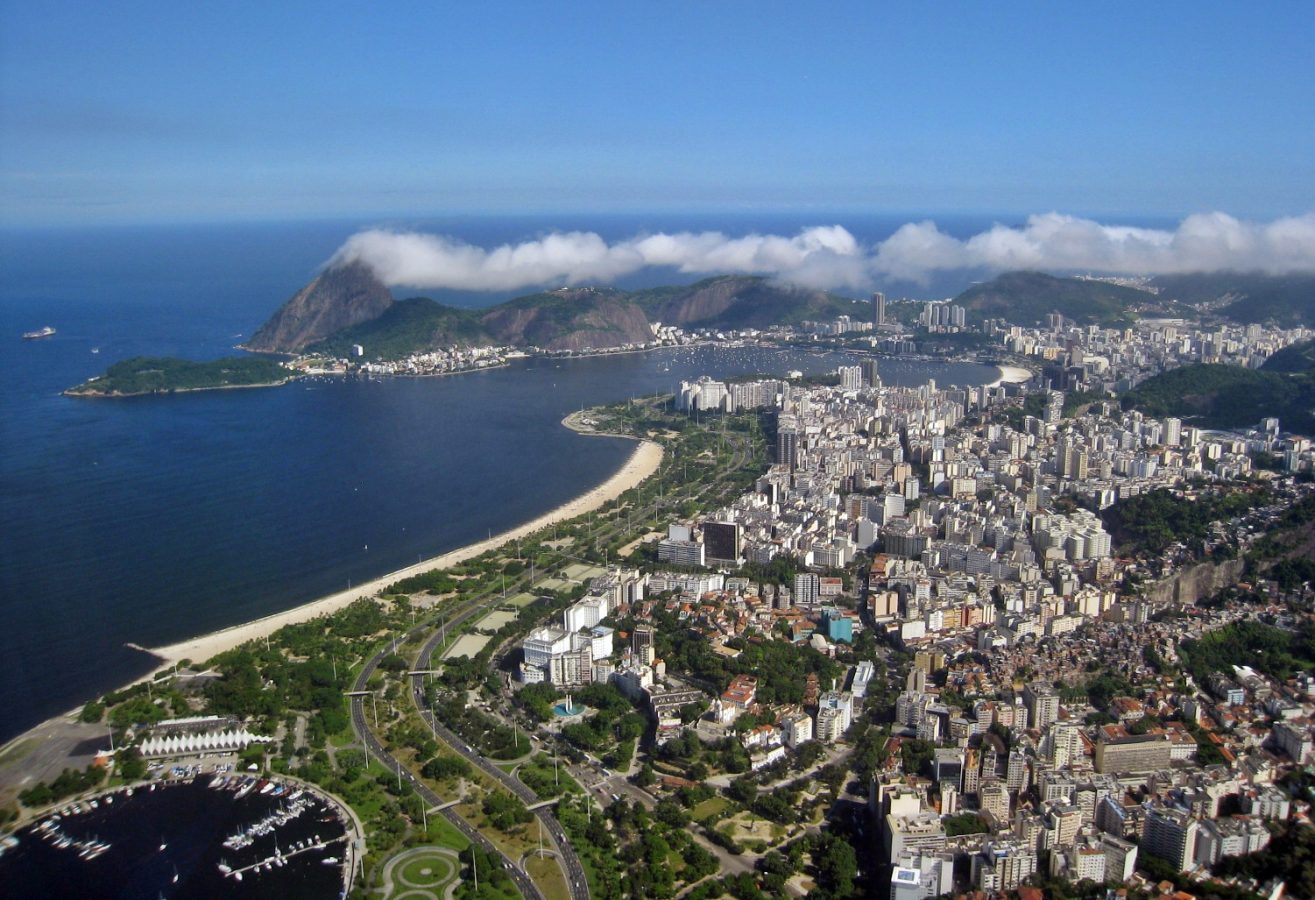
Flamengo isn’t just another neighborhood in Rio—it’s where the city exhales. Unlike the tourist-packed streets of Copacabana or Ipanema, this is a place where Rio unfolds at its own pace, unfiltered and unhurried. Wide parks stretch along the bay, their paths winding past families on weekend strolls and joggers cutting through the morning mist. The waterfront shifts with the light, from soft pastels at dawn to the golden haze of late afternoon, while the streets hum with the quiet rhythm of daily life. There are no postcard vendors here, no crowds jostling for the perfect shot—just the easy cadence of a neighborhood that doesn’t perform for visitors but lets them watch, unnoticed.
At the heart of Flamengo lies its namesake park, a sprawling green lung carved from what was once marshland. In the 1960s, the city reclaimed the area, turning it into a public space that now pulses with activity. On any given day, you’ll find cyclists weaving through shaded lanes, groups picnicking under the trees, and children chasing soccer balls across open fields. But the park is more than just a place to stretch your legs. Scattered among its gardens are cultural landmarks—a planetarium, a theater, and the Museum of Modern Art, where the works of Brazilian artists share space with international pieces. The museum’s brutalist architecture, all sharp angles and raw concrete, stands in stark contrast to the lush greenery around it, a reminder that Flamengo is as much about ideas as it is about leisure.
The neighborhood wears its history lightly, layering old and new without fuss. In the early 20th century, wealthy cariocas built their villas here, drawn by the bay views and the promise of space. Later, mid-century apartment blocks rose alongside them, their clean lines and functional designs reflecting the optimism of a modernizing city. Walk down any street, and you might pass a colonial-era church with its weathered facade, then turn a corner to find a sleek, glass-fronted loft. The mix shouldn’t work, but it does—each era leaving its mark without erasing what came before. Even the names of the streets hint at the past, a quiet nod to the generations who’ve called Flamengo home.
Food here is simple, honest, and unapologetically local. There are no overpriced beachfront restaurants, no menus translated into five languages. Instead, you’ll find small eateries where the day’s catch is grilled with little more than salt and lime, or family-run spots serving feijoada so rich it could fuel a week’s worth of sightseeing. Seafood is the star—shrimp stewed in coconut milk, octopus salad with just a hint of chili, fish so fresh it tastes like the ocean itself. The best meals come without fanfare, served on plastic tables with a side of cold beer and the hum of conversation in Portuguese. It’s the kind of food that doesn’t need a view to impress.
As evening falls, Flamengo doesn’t so much wake up as settle into itself. The bars fill with the sound of samba drifting from open windows, while couples and groups of friends gather along the waterfront, watching the lights of Niterói flicker across the bay. There are no thumping nightclubs here, no tourist traps peddling overpriced caipirinhas. Instead, the night unfolds slowly—impromptu capoeira circles in the park, the clink of glasses at a neighborhood boteco, the occasional burst of laughter from a balcony. It’s not the Rio of carnival or fireworks, but the Rio of ordinary moments, where the city’s warmth seeps into your bones without you even noticing. For those who want to experience the city beyond the brochures, Flamengo offers something rare: a place that feels like home, even if you’ve only just arrived.
Stay
0 placesNothing in this category yet — the catalogue is still growing.
All placesPlaces on the map
Marker colour follows the categoryClimate and weather
Detailed weather: Flamengo- Average temperature
- 24 °C
- Precipitation per year
- 0 mm
Average air temperature
°C
27
27
27
25
23
22
21
21
23
24
24
26
Jan
Feb
Mar
Apr
May
Jun
Jul
Aug
Sep
Oct
Nov
Dec