Thebes
Egypt · 7 places
Photo: Rémih, CC BY-SA 3.0
Thebes is a city where time seems to stand still, its ancient stones whispering stories of a civilization that once shaped the world. Straddling the banks of the Nile, it was the beating heart of ancient Egypt, a capital of pharaohs and a center of religious power. Today, its grandeur survives only in ruins, yet even those fragments—towering temples, royal tombs, and weathered sphinxes scattered across both shores—carry an undeniable weight. History isn’t just recounted here; it lingers in the air, tangible the moment you set foot on this land.
The west bank of the Nile is the realm of the dead, where kings and nobles were laid to rest in the shadow of the cliffs. The Valley of the Kings, hidden among the rocks, holds the tombs of Tutankhamun, Ramses II, and others, their walls alive with vivid paintings and hieroglyphs that have endured for millennia. Nearby, the Temple of Hatshepsut rises from the mountainside, its terraces carved directly into the stone—a masterpiece of design that still astonishes with its bold simplicity. Beyond it, the tombs of nobles offer glimpses into daily life: hunting scenes, feasts, and rituals, as if the past has only momentarily paused, waiting to resume.
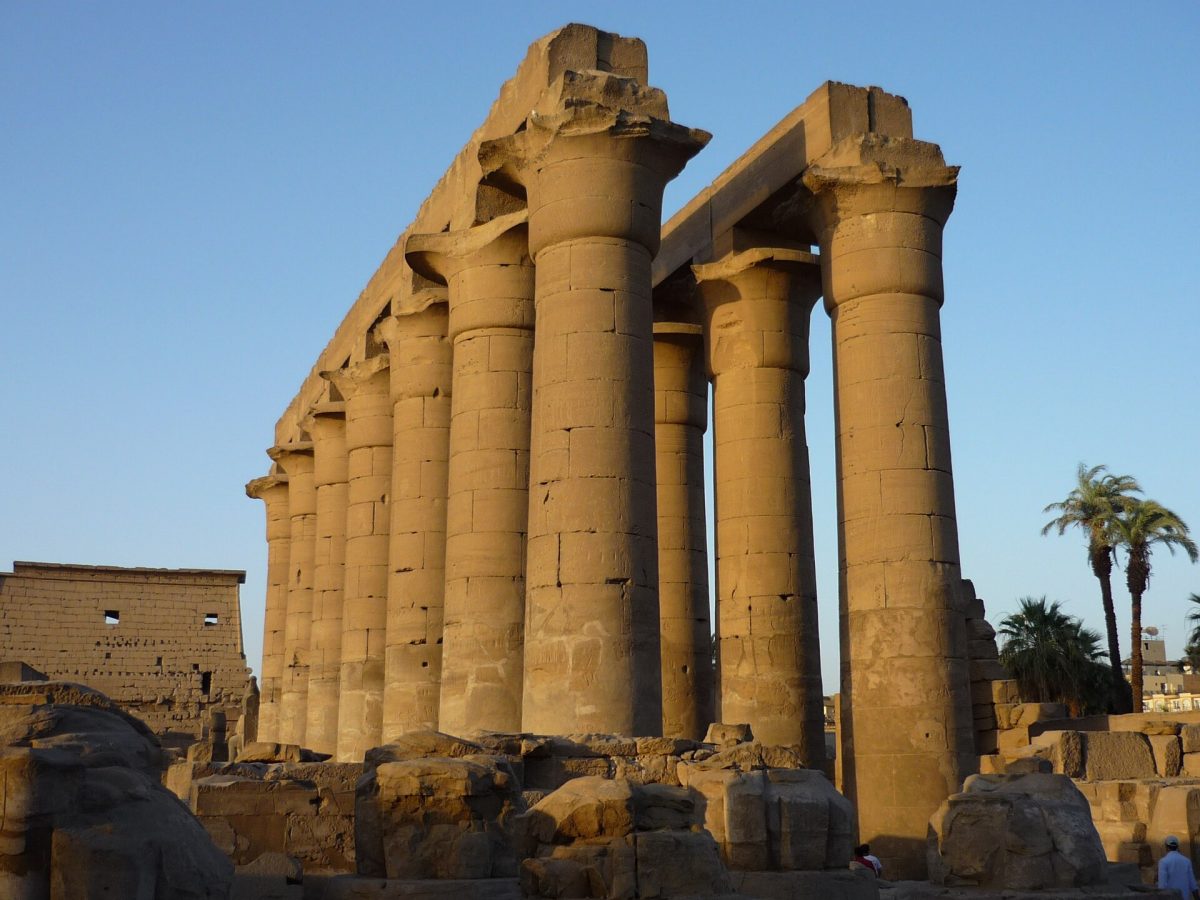
Across the river, the east bank was once the domain of the living. Here, the temples of Karnak and Luxor stand as testaments to devotion, built in honor of the gods Amun, Mut, and Khonsu. Karnak is a sprawling complex of columns, obelisks, and statues, each corner steeped in history. The Great Hypostyle Hall, with its forest of towering pillars, is especially striking at sunset, when the light gilds the stone in warm hues. Luxor Temple, dedicated to the Theban triad, impresses with its grandeur and elegance, its once-broken avenue of sphinxes now partially restored—a path that feels like a bridge between eras.
Modern life thrives in Luxor, the city that grew from the ruins of ancient Thebes. Markets overflow with spices and handcrafted goods, streets hum with conversation, and the Nile promenade draws both locals and visitors under the shade of palm trees. Yet step away from the bustle, and the past reasserts itself: the silhouettes of temples and tombs rise against the skyline, a constant reminder that this place is more than a destination. It’s where history and the present coexist, each shaping the other in quiet, unexpected ways.
To visit Thebes is to walk through time. There’s no need to imagine what ancient Egypt was like—it reveals itself in every carved stone, every faded inscription, every breath of wind carrying the scent of sand and river. This is a place where the past isn’t just remembered; it’s felt, alive in the land itself, long after the last pharaoh walked these shores.
Eat & Drink
0 placesNothing in this category yet — the catalogue is still growing.
All placesPlaces on the map
Marker colour follows the categoryClimate and weather
Detailed weather: Thebes- Average temperature
- 26 °C
- Precipitation per year
- 3 mm
Average air temperature
°C
15
17
22
27
32
34
35
35
32
28
22
17
Jan
Feb
Mar
Apr
May
Jun
Jul
Aug
Sep
Oct
Nov
Dec