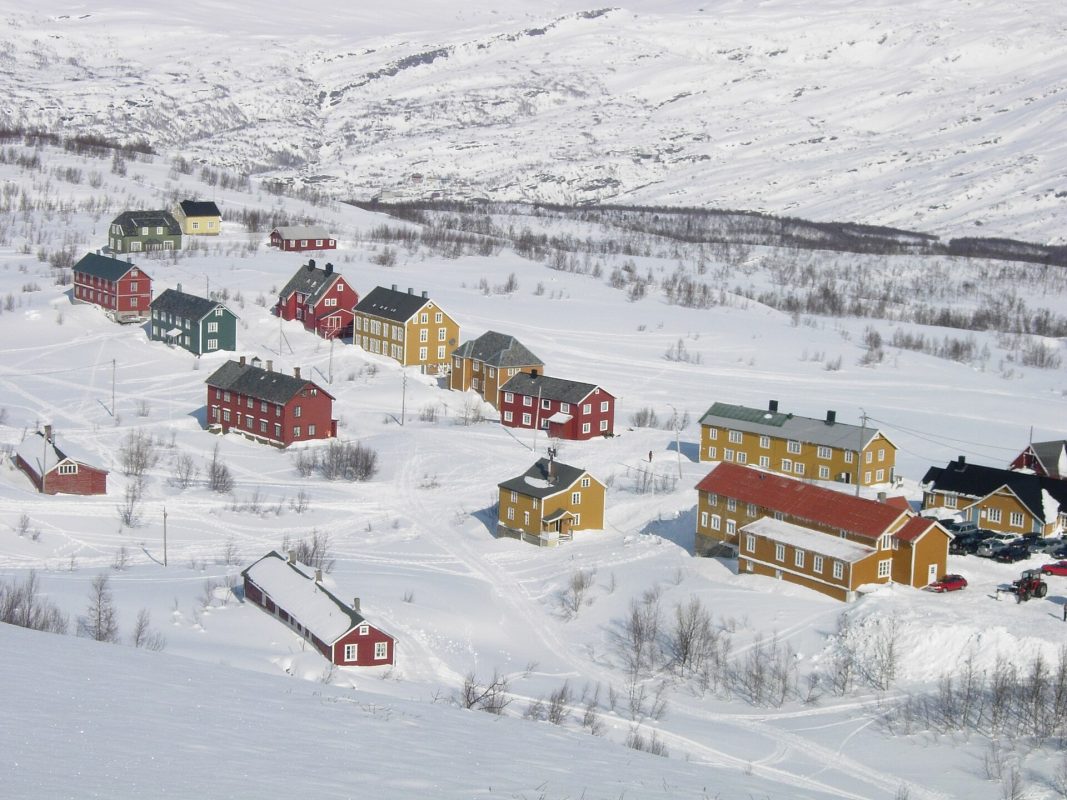
Weather overview
Fauske sits in northern Norway, where the climate shifts noticeably with the seasons. Winters here are cold but not extreme, with January and February bringing average temperatures around -0.9 °C and -0.6 °C. Snow is common, and the days are short, but the landscape takes on a quiet, wintry beauty. By April, the air warms slightly to 3.5 °C, and the snow begins to melt, revealing the first signs of spring.
Summer in Fauske is mild and pleasant, with July being the warmest month at 14.4 °C. The days stretch long into the evening, offering plenty of daylight for exploring. September marks the transition to autumn, with temperatures dropping to 10.8 °C and the surrounding forests turning golden. Rain becomes more frequent in October, setting the stage for the cooler months ahead.
Temperature
Temperatures in Fauske follow a clear seasonal pattern. From December to February, the mercury hovers just below freezing, with averages between -0.9 °C and 0.5 °C. Nighttime lows can dip to -2.9 °C in January, so layers are essential. By May, the weather warms to 7.8 °C, and the days feel noticeably brighter.
The brief summer in Fauske brings the most comfortable conditions. June sees averages of 11.7 °C, while July peaks at 14.4 °C. Evenings remain cool, so a light jacket is useful. By September, temperatures start to decline, falling to 10.8 °C, and by November, the cold returns, with averages around 2.8 °C.
| Month | Minimum | Maximum |
|---|---|---|
| January | -2.9 | 1.2 |
| February | -2.8 | 1.5 |
| March | -2.2 | 3 |
| April | 0.8 | 6.1 |
| May | 4.9 | 10.7 |
| June | 8.6 | 14.8 |
| July | 11.4 | 17.6 |
| August | 11 | 17 |
| September | 8.2 | 13.5 |
| October | 3.8 | 7.7 |
| November | 0.9 | 4.6 |
| December | -1.5 | 2.5 |
Precipitation
Rain and snow are part of life in Fauske, with precipitation spread throughout the year. The wettest months are October and September, with 141.5 mm and 120.9 mm of rain, respectively. Winter brings snow, especially in January and December, when totals reach 124.7 mm and 129.2 mm.
The driest period falls in April, with just 56.3 mm of precipitation. May and June are also relatively dry, making them good times to visit if you prefer fewer rainy days. However, even in summer, rain can arrive unexpectedly, so packing a waterproof layer is wise.
| Month | Precipitation |
|---|---|
| January | 124.7 |
| February | 102.6 |
| March | 119.7 |
| April | 56.3 |
| May | 64.7 |
| June | 81.9 |
| July | 70.2 |
| August | 76.7 |
| September | 120.9 |
| October | 141.5 |
| November | 97.8 |
| December | 129.2 |
What to pack
For a winter trip to Fauske, pack warm, insulated clothing. Temperatures in January and February can drop below -2 °C, so a heavy coat, gloves, and waterproof boots are essential. Layering helps manage the cold, especially if you plan to spend time outdoors.
In summer, lighter layers work well, but evenings can still feel chilly. A mix of short- and long-sleeve shirts, along with a light jacket, will keep you comfortable. For May through September, a waterproof shell is useful for rain showers. If you visit in October or November, expect cooler weather and pack accordingly—think sweaters, a warm coat, and sturdy shoes.
| Month | Wind speed |
|---|---|
| January | 8.5 |
| February | 8.1 |
| March | — |
| April | 5.5 |
| May | 5.5 |
| June | 4.9 |
| July | 4.1 |
| August | 4.7 |
| September | 5.8 |
| October | 6.3 |
| November | 7.1 |
| December | 7.9 |


