Étretat
France · 6 places
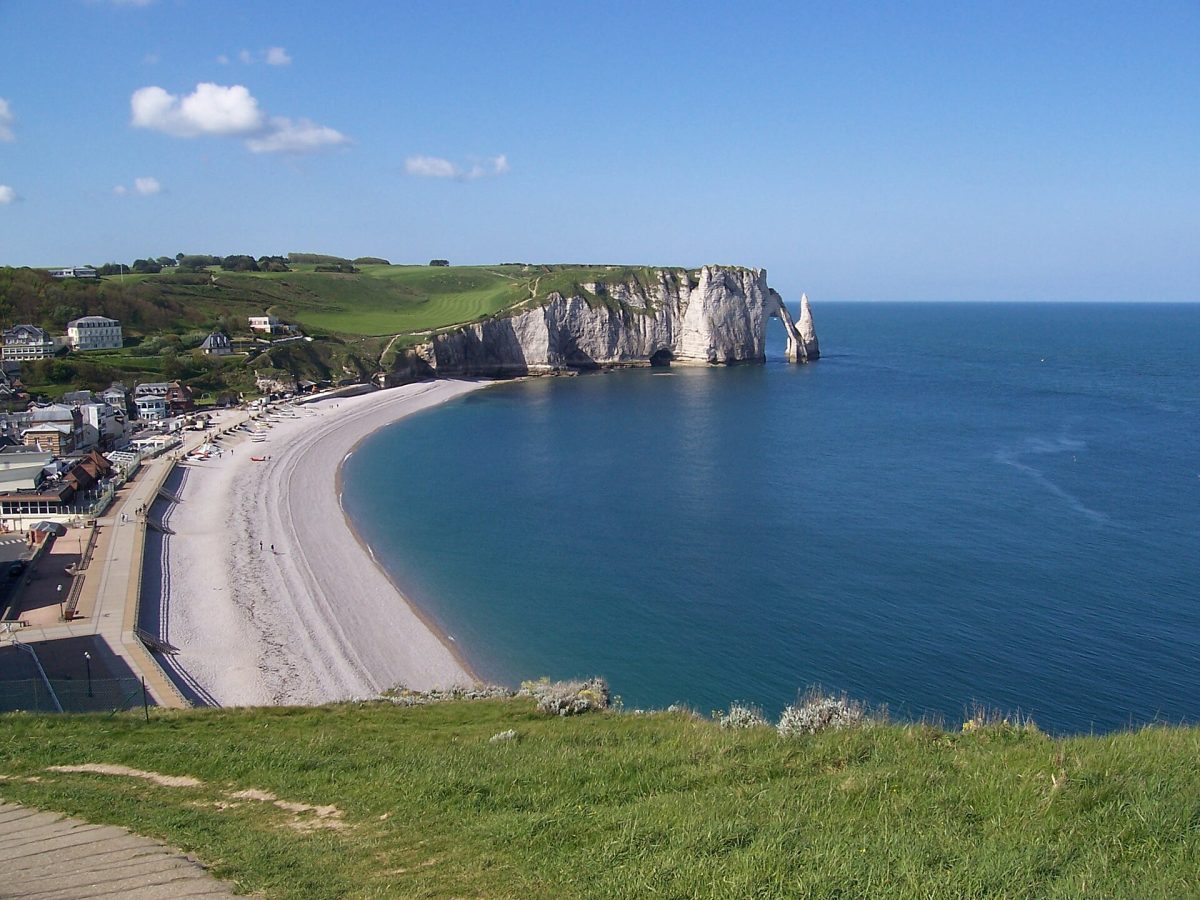
Photo: Denis Chermette, Public domain
Étretat feels like a place where time slows down just enough to let you breathe. Tucked along the Normandy coast, where the English Channel meets towering chalk cliffs, this small town has none of the crowded promenades or flashy resorts you’d find elsewhere in France. Instead, it offers quiet streets lined with slate-roofed houses, the occasional café spilling onto the pavement, and the ever-present scent of salt and seaweed. There’s no rush here—just the steady rhythm of waves and the occasional clink of glasses as locals sip cider or white wine with plates of fresh oysters or mussels.
The real draw, though, is the cliffs. They rise from the shore like ancient sentinels, their white faces carved by wind and water into dramatic shapes. The most famous is the Amont Arch, a natural stone bridge that juts into the sea, its silhouette instantly recognizable. Hiking up the winding paths to the top rewards you with views that stretch for miles—endless blue meeting green hills, the horizon blurring where sky and water merge. On clear days, the light plays across the cliffs in a way that makes you understand why Monet painted them, why Maupassant wrote about them. The landscape here doesn’t just exist; it feels alive, as if the rocks themselves are holding stories.
The beaches are different from those in the south. No golden sand or palm trees, just smooth pebbles polished by the tide and water that’s cool even in summer. Locals and visitors alike wade in during the early hours, when the shore is nearly empty, or wander the exposed seabed at low tide, collecting shells or watching the sunlight dance on the waves. If you’re lucky, you might see fishermen returning with their catch—shrimp, crabs, or small fish that end up grilled or fried in the little restaurants along the waterfront. There’s no pretense here, just the simple pleasure of food pulled straight from the sea.
Life in Étretat moves at its own pace. Mornings begin with the hum of fishing boats heading out, while evenings settle into the sound of waves against the shore. There are no grand hotels or amusement parks, just family-run guesthouses where the owners might share stories over breakfast or recommend a hidden path along the cliffs. The weekly market is the heart of the town, selling everything from fresh seafood to Normandy cheese and bottles of calvados, the local apple brandy that warms you from the inside out.
What makes Étretat special isn’t any single attraction, but the way it makes you feel. It’s the kind of place where you can spend an afternoon perched on a rock with a book, the cries of gulls overhead and the ocean stretching out before you. Or where you might walk for hours along the shore, losing track of time without caring. There’s no grand spectacle here, just the quiet magic of a town that lives by its own rules—inviting you to slow down, look around, and let the sea set the rhythm for a while.
Eat & Drink
0 placesNothing in this category yet — the catalogue is still growing.
All placesPlaces on the map
Marker colour follows the categoryClimate and weather
Detailed weather: Étretat- Average temperature
- 12 °C
- Precipitation per year
- 1126 mm
- Average humidity
- 80 %
- Sunshine hours per day
- 8.1 h
- Time zone
- UTC+2 (GMT+2)
Average air temperature
°C
6
8
9
11
13
17
18
19
17
14
11
8
Jan
Feb
Mar
Apr
May
Jun
Jul
Aug
Sep
Oct
Nov
Dec