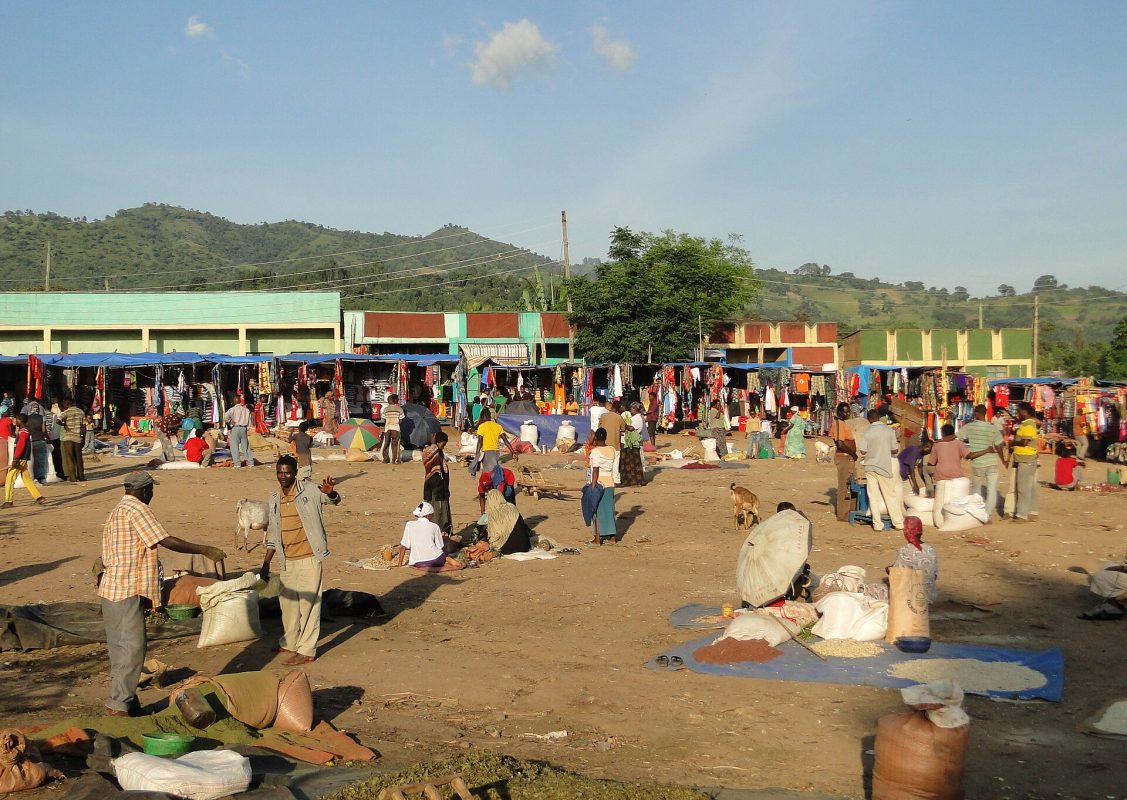
Weather overview
Джинка sits in the southern highlands of Ethiopia, where the climate remains warm year-round but shifts noticeably between dry and rainy periods. From January to February, the weather is at its driest, with plenty of sunshine and daytime highs around +30 °C. By March, the first rains begin to cool the air slightly, though temperatures stay pleasant.
The heaviest rains arrive in April and May, followed by a second wet season in September and October. These months bring frequent showers, which can make travel slower but also turn the landscape lush and green. Between these rainy spells, June through August and November through December offer a mix of dry days and lighter rainfall, making them a balanced time to explore Джинка.
Temperature
Temperatures in Джинка vary modestly across the year, with daytime highs typically ranging from +26 °C to +31 °C. The warmest months are February and March, when the mercury can climb to +31 °C, while July is the coolest, with highs around +26 °C. Nights are mild throughout the year, rarely dropping below +19 °C, even in the cooler months.
The most stable temperatures occur from June to September, when daily highs hover around +27 °C and lows stay near +20 °C. Travelers will find the air comfortable for outdoor activities, though the occasional rain shower may require a light jacket. In contrast, April and May see slightly lower daytime temperatures due to cloud cover and rain, but the humidity can make the air feel warmer.
| Month | Minimum | Maximum |
|---|---|---|
| January | 20.8 | 30.3 |
| February | 21.2 | 31.1 |
| March | 21.9 | 30.9 |
| April | 20.7 | 29.5 |
| May | 20.4 | 27 |
| June | 19.9 | 27.8 |
| July | 19.8 | 26.3 |
| August | 19.8 | 27.3 |
| September | 20.1 | 28.1 |
| October | 20.1 | 27.1 |
| November | 20 | 28.3 |
| December | 20.2 | 29.5 |
Precipitation
Rainfall in Джинка follows a clear seasonal pattern, with two distinct wet periods. The first and heaviest spans April and May, when monthly rainfall can exceed 150 mm, often falling in short, intense bursts. The second rainy season arrives in September and October, bringing similar amounts of precipitation but with slightly more variability in timing.
The driest months—January, February, and December—see almost no rain, with totals under 12 mm per month. These months are ideal for travelers who prefer dry conditions, though the landscape may appear less vibrant. Between the wet seasons, June through August and November offer a mix of dry days and light showers, making them a practical choice for those who want to avoid the heaviest downpours.
| Month | Precipitation |
|---|---|
| January | 9.2 |
| February | 6.8 |
| March | 54.7 |
| April | 149.5 |
| May | 171.3 |
| June | 66.8 |
| July | 70.7 |
| August | 59.7 |
| September | 134.9 |
| October | 169.3 |
| November | 77.3 |
| December | 11.9 |
What to pack
For a trip to Джинка during the dry months of January, February, or December, pack lightweight, breathable clothing to stay comfortable in the warm daytime temperatures. A wide-brimmed hat and sunscreen are useful for protection against the strong sun, while a light jacket or shawl will suffice for cooler evenings.
If visiting during the rainy seasons—April to May or September to October—waterproof footwear and a compact umbrella are essential. Quick-dry clothing and a waterproof bag for electronics will help keep you comfortable during sudden downpours. For the transitional months like June or November, layers are key, as mornings can be cool while afternoons warm up quickly.
Regardless of the season, sturdy walking shoes are recommended for exploring Джинка’s terrain, which can be uneven and muddy after rain. A reusable water bottle is also a good idea, as staying hydrated is important in the warm climate.
| Month | Wind speed |
|---|---|
| January | 2.6 |
| February | 2.5 |
| March | 2.2 |
| April | 1.9 |
| May | 2.4 |
| June | 2.4 |
| July | 2.5 |
| August | 2.4 |
| September | 2 |
| October | 1.9 |
| November | 2.2 |
| December | 2.1 |


