Chorrillos
Peru · 6 places
Photo: Alex Proimos from Sydney, Australia, CC BY 2.0
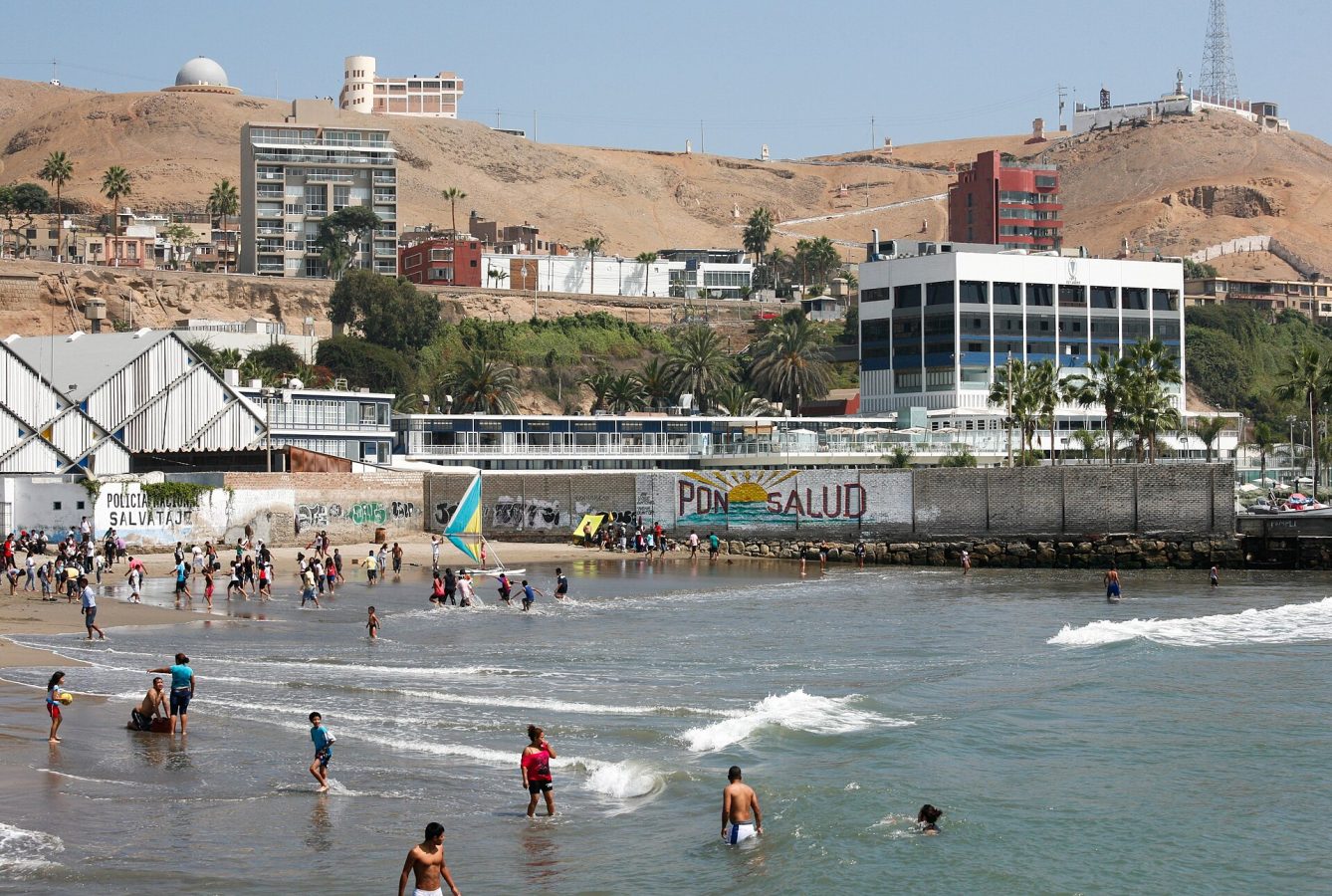
Chorrillos is the kind of place most travelers overlook in Lima, yet it’s where the city feels most alive—raw, unfiltered, and deeply itself. Stretching along the Pacific coast on the southern edge of the capital, it’s a landscape of jagged cliffs giving way to sandy coves, where waves crash against the rocks with such force that mist drifts onto the promenade. There are no luxury hotels here, no crowds of tourists angling for the perfect shot. Instead, you’ll find fishing boats returning at dawn with the day’s catch, vendors grilling fresh seafood on the street, and locals who come not for Instagram, but simply to be near the water.
The history of Chorrillos is one of contrasts—of glamour and ruin, of war and resilience. In the late 19th century, it was Lima’s most fashionable seaside escape, a place where the city’s elite built grand European-style villas, sipped coffee in elegant cafés, and listened to orchestras play as the sun set over the ocean. But that golden era ended abruptly during the War of the Pacific, when Chilean forces invaded and left much of the town in ruins. Today, only fragments remain: an old lighthouse, a villa now housing a military museum, their weathered facades hinting at a time when Chorrillos was the place to be for anyone who mattered.
Life here moves to the rhythm of the sea, not the demands of tourism. Mornings belong to the fishermen heading out to sea, afternoons to surfers riding the waves and families picnicking on the beach. By evening, the waterfront comes alive with the glow of small bars and restaurants, where the specialty is ceviche—raw fish cured in lime juice, tossed with chili and red onion, served without pretension. There are no Michelin stars in Chorrillos, just honest cooking, the kind that relies on fresh ingredients and generations of know-how.
The heart of the town beats at its market, where the day’s catch arrives straight from the boats. Here, you can buy not just fish, but sea urchins, octopus, and shellfish that might be unfamiliar to outsiders. The vendors are happy to explain how to prepare them, and if you’re lucky, they’ll offer a taste of ceviche made just minutes before. The market isn’t just a place to shop—it’s where neighbors catch up, gossip is exchanged, and recipes are passed down. It’s the kind of place where you don’t just observe life; you step right into it.
Chorrillos doesn’t try to impress. There are no grand cathedrals or world-class museums, no carefully curated experiences for visitors. What it offers instead is something rarer: authenticity. This is a place where the ocean sets the pace, where people know each other by name, and where evenings are spent listening to the surf and the laughter of kids playing on the sand. Maybe that’s why those who visit once often find themselves coming back—not for the photos, but for the quiet understanding that here, the city isn’t just a backdrop. It’s alive.
Eat & Drink
0 placesNothing in this category yet — the catalogue is still growing.
All placesPlaces on the map
Marker colour follows the categoryClimate and weather
Detailed weather: Chorrillos- Average temperature
- 20 °C
- Precipitation per year
- 33 mm
- Sunshine hours per day
- 1.5 h
Average air temperature
°C
23
24
23
22
19
18
17
17
17
18
19
21
Jan
Feb
Mar
Apr
May
Jun
Jul
Aug
Sep
Oct
Nov
Dec


