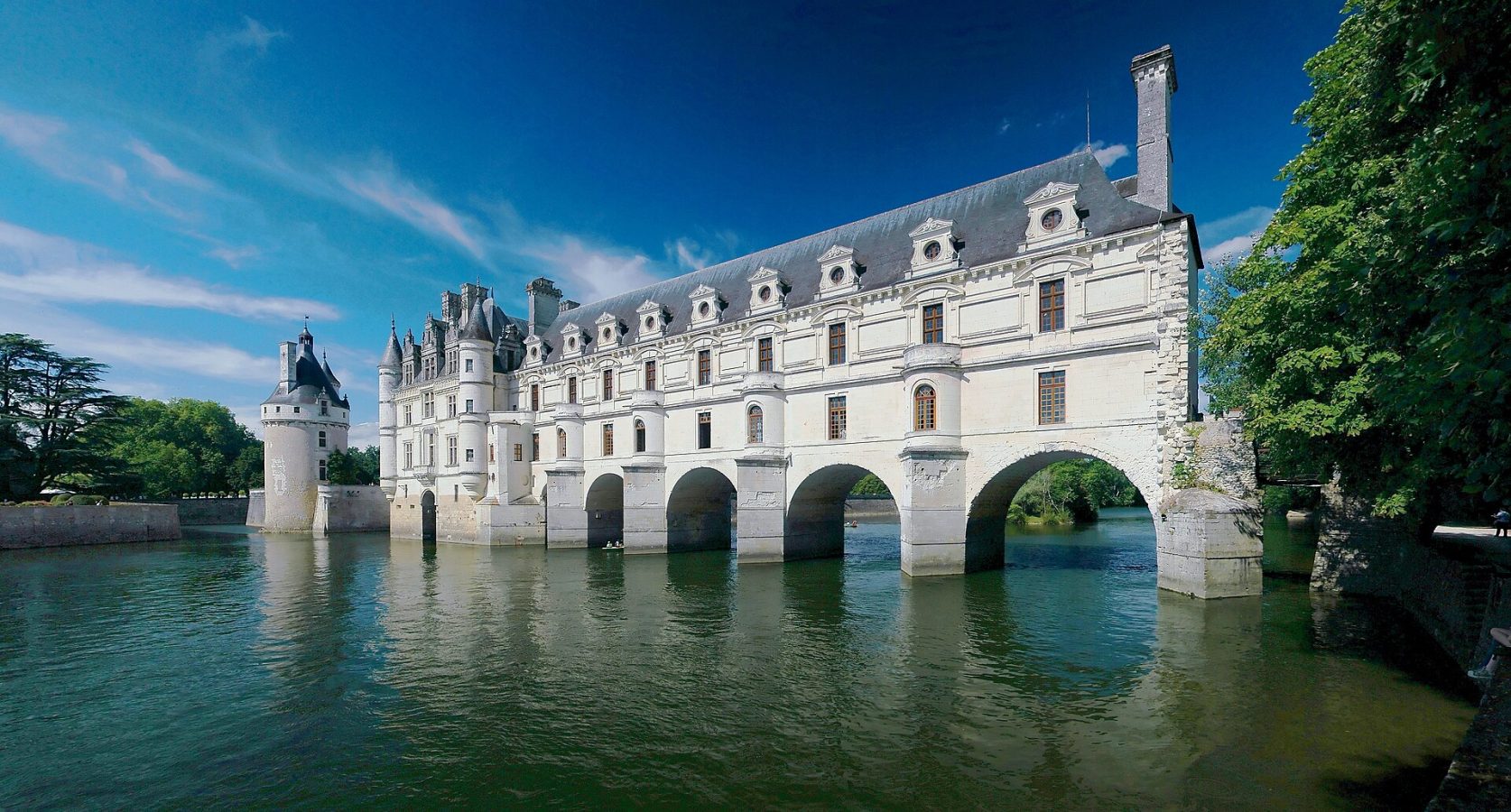
Château de Chenonceau
France · 7 places
Photo: Wikimedia Commons, GFDL
Chenonceau is one of those rare places that feels both intimate and timeless. The village itself is small enough to explore in an afternoon, yet it lingers in your memory long after you’ve left. There’s no rush here, no crowds jostling for space—just quiet streets lined with stone houses draped in ivy, little cafés serving local wine and warm bread, and evenings scented with lavender and herbs from hidden gardens. It doesn’t try to impress; it simply exists, and that’s more than enough.
The heart of Chenonceau is its château, often called the "Ladies’ Castle" for the women who shaped its history. Diane de Poitiers, the favorite of King Henry II, transformed it into a lavish retreat, designing the gardens that still astonish with their geometric precision. After her, Catherine de’ Medici added the gallery that stretches over the River Cher—a delicate, almost weightless structure that seems to float above the water. The château today feels lived-in, not like a museum. The furniture, paintings, and tapestries remain as they were, as if the former residents had just stepped out for a moment.
Walking through its rooms is like stepping into the Renaissance. The Guard Room still holds the armor and weapons of the past, while Catherine’s library preserves the books she once read. The kitchen, built right over the river, makes it easy to imagine the feasts prepared for royal guests. The gardens are just as captivating: Diane’s formal parterres on one side, Catherine’s more romantic, meandering designs on the other. In summer, roses bloom in abundance, and in autumn, the trees reflect in the still waters of the Cher, turning the scene into something out of an Impressionist painting.
But Chenonceau is more than its château. The village and its surroundings invite slow exploration. You can rent a boat on the river, linger on the banks with a glass of local wine, or wander through nearby vineyards where Chenin Blanc and Sauvignon Blanc grapes thrive. The forests that once echoed with royal hunts now offer peaceful walks, and the neighboring villages, with their ancient stone churches, feel frozen in time. If you’re lucky, you might stumble upon a market selling fresh produce, honey, and homemade jams—small pleasures that make the Loire Valley so irresistible.
This isn’t a place for thrill-seekers or those chasing the latest trends. There are no amusement parks, no loud festivals, no designer boutiques. Instead, Chenonceau offers something quieter: the chance to pause, to breathe, to step into a rhythm of life that’s all but vanished elsewhere. You could spend a day here, or a week, cycling through the countryside or simply sitting in a café with a book. The time you spend doesn’t matter as much as the feeling you take with you—that here, history isn’t just preserved behind glass, but alive in the air, the water, and the stones beneath your feet.
Eat & Drink
0 placesNothing in this category yet — the catalogue is still growing.
All placesPlaces on the map
Marker colour follows the categoryClimate and weather
Detailed weather: Château de Chenonceau- Average temperature
- 13 °C
- Precipitation per year
- 670 mm
- Sunshine hours per day
- 5.8 h
Average air temperature
°C
5
7
9
12
15
19
21
21
18
14
9
6
Jan
Feb
Mar
Apr
May
Jun
Jul
Aug
Sep
Oct
Nov
Dec


