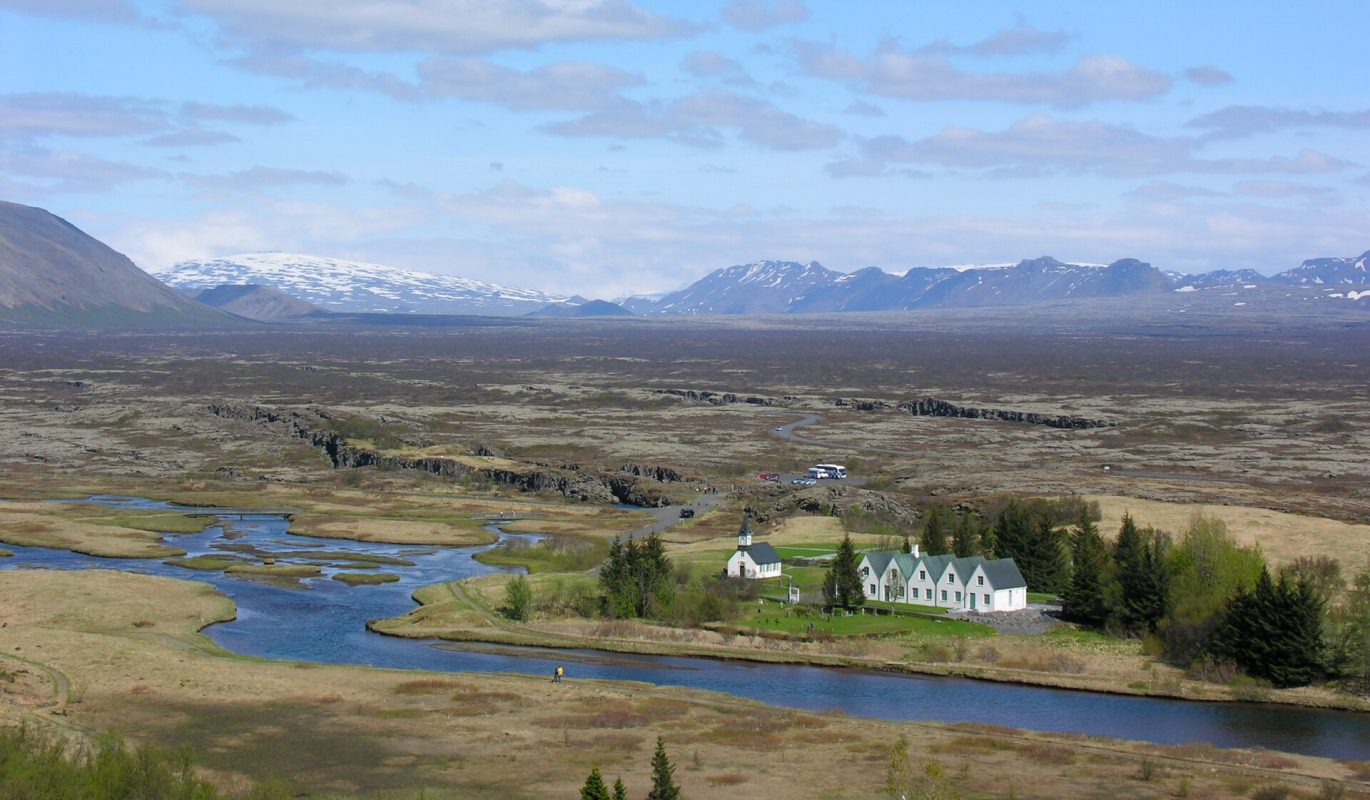
Weather overview
The weather in Блаускоугабиггд reflects Iceland’s coastal climate, with mild but changeable conditions year-round. Winters are cool, rarely dropping below -2.8 °C in January, while summers remain fresh, peaking at +14.9 °C in July. The shoulder seasons—April and September—offer a balance between daylight and moderate temperatures, making them ideal for exploring the area without extreme cold or crowds.
Rainfall is a constant in Блаускоугабиггд, with the wettest months arriving in September and October, when precipitation often exceeds 110 mm. Even in the drier July, expect around 58 mm of rain, so waterproof layers are always useful. Daylight varies dramatically: December brings just 0.5 hours of sunshine per day, while May and June offer nearly 7 hours, perfect for outdoor activities.
Temperature
Temperatures in Блаускоугабиггд stay relatively stable, with a narrow range between seasons. January and February average around +0.1 °C to +1.2 °C, while July and August hover near +11.6 °C. The coldest nights occur in January, dipping to -2.8 °C, but frost is rare. By May, daytime highs reach +10.4 °C, and the warmth lingers into September, when averages drop back to +8.5 °C.
The transition between seasons is gradual. March and November feel similar, with averages of +1.7 °C and +2.8 °C respectively, though November can feel colder due to shorter days. Even in summer, nights remain chilly, often falling to +7.1 °C in June or +8.6 °C in August, so packing layers is essential for comfort.
| Month | Minimum | Maximum |
|---|---|---|
| January | -2.8 | 2.8 |
| February | -1.7 | 3.8 |
| March | -1 | 4.6 |
| April | 1.9 | 7.8 |
| May | 4.3 | 10.4 |
| June | 7.1 | 12.9 |
| July | 9.2 | 14.9 |
| August | 8.6 | 14.5 |
| September | 5.9 | 11.6 |
| October | 3 | 8.2 |
| November | 0.3 | 5.1 |
| December | -2.3 | 3 |
Precipitation
Блаускоугабиггд receives steady rainfall throughout the year, with no truly dry season. The driest period is July, with about 58 mm of precipitation, while September and October see the highest totals, around 114 mm. Snow is uncommon but possible in January and February, though it rarely accumulates for long.
Rainfall patterns influence travel plans. May and June offer slightly drier conditions, with around 70–84 mm of rain, while August marks the start of the wetter season. Even in the wettest months, rain often comes in short bursts, leaving room for outdoor activities if you’re prepared with waterproof gear.
| Month | Precipitation |
|---|---|
| January | 109.4 |
| February | 103.1 |
| March | 77.2 |
| April | 79.4 |
| May | 84.3 |
| June | 70.4 |
| July | 57.9 |
| August | 69.5 |
| September | 114.3 |
| October | 113.7 |
| November | 107.3 |
| December | 87.5 |
What to pack
For a trip to Блаускоугабиггд in winter, focus on warmth and waterproofing. A insulated jacket, thermal layers, and waterproof boots will handle temperatures near 0 °C and frequent rain. Gloves and a hat are useful for windy days, especially in January and February, when frost is possible.
In summer, lighter layers work well for daytime highs of +12...+15 °C, but evenings can feel cool, so a fleece or sweater is wise. A waterproof jacket remains essential, even in July, when rain is less frequent but still likely. For spring or autumn, pack versatile layers—think long-sleeve shirts, a light jacket, and a scarf—to adapt to shifting conditions between +5 °C and +10 °C.
| Month | Wind speed |
|---|---|
| January | 5.7 |
| February | 6 |
| March | 5.1 |
| April | 5 |
| May | 4.8 |
| June | 4.3 |
| July | 3.8 |
| August | 4 |
| September | 4.6 |
| October | 5 |
| November | 5.1 |
| December | 5 |


