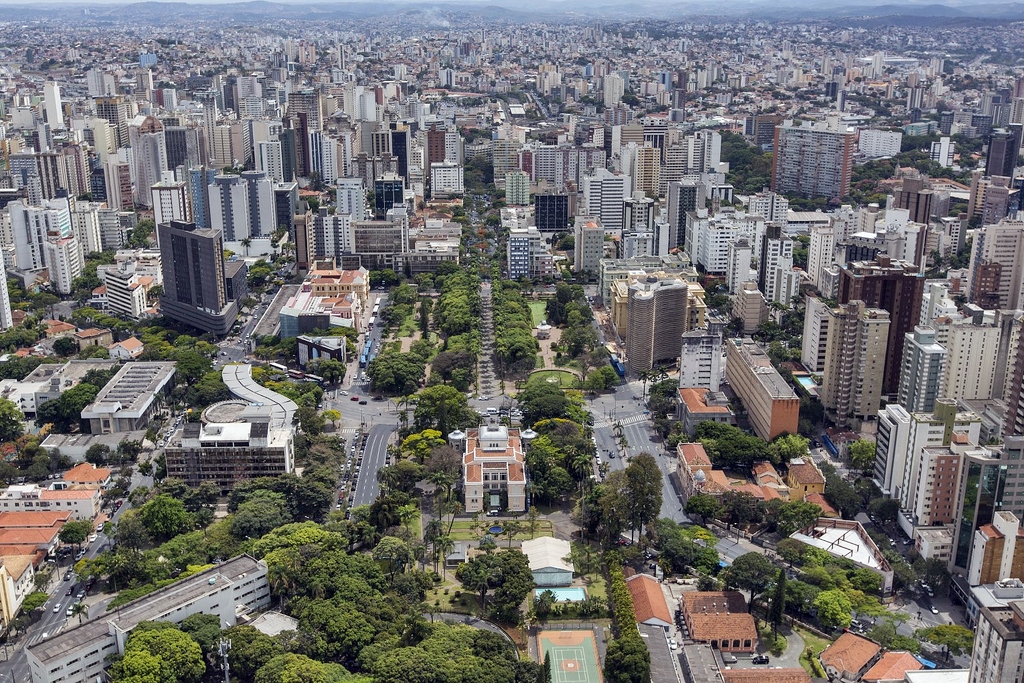
Belo Horizonte
Brazil · 8 places
Photo: Marcus Desimoni/Portal da Copa, CC BY-SA 2.0
Belu Horizonte moves to its own quiet rhythm, a city that doesn’t demand attention but rewards those who take the time to notice. Unlike Rio with its beaches and carnival spectacle or São Paulo’s towering skyline and relentless energy, this place feels grounded in something real—hills instead of ocean, parks instead of postcards, streets where life unfolds without the pressure of performance. Founded in the late 19th century as the new capital of Minas Gerais, it grew into a major city without losing the scale of human connection, a rare balance in Brazil’s urban landscape.
The architecture here tells a story of ambition and restraint. In the downtown core, art deco buildings from the 1930s still stand, remnants of the city’s first construction boom, their clean lines and geometric details offering a glimpse into a more optimistic era. Liberty Square, with its grand palace and fountains, remains a favorite weekend stroll for locals, a place where families gather and old friends catch up over coffee. But the real architectural surprise lies in Pampulha, where Oscar Niemeyer’s mid-century masterpieces feel as fresh as if they were built yesterday. The Church of Saint Francis of Assisi, with its sweeping curves and whitewashed walls, seems to float above the water, while the nearby Museum of Art twists and turns in ways that still feel futuristic. Niemeyer designed these buildings in the 1940s, yet they haven’t aged a day.
Food and music are the lifeblood of Minas Gerais, and Belu Horizonte pulses with both. The city’s culinary reputation is built on hearty, unpretentious dishes—feijoada, the rich black bean stew with pork, is served in no-frills restaurants where the portions are generous and the conversation flows just as freely. Then there’s pão de queijo, the addictive cheese bread that crumbles at the first bite, best enjoyed with a strong cup of coffee in one of the city’s many corner cafés. Evenings often spill into the bars of Savassi, where samba and choro music isn’t performed for an audience but lived, the notes rising from open windows and sidewalk tables. People sing along, clap, or simply sway where they stand, because here, music isn’t entertainment—it’s how the city breathes.
What makes Belu Horizonte special is its lack of pretense. Modern shopping malls and glass-fronted office buildings coexist with older neighborhoods where time moves slower, where narrow streets are lined with low-slung houses and the scent of grilling meat drifts from backyard churrasqueiras. There are no crowds of tourists, just the hum of daily life—bustling markets selling everything from tropical fruit to vintage records, cafés where the coffee is strong and the gossip stronger, parks where people walk their dogs or practice yoga at dawn. The city doesn’t try to impress; it simply exists, and in that quiet confidence, it reveals something authentic about Brazil.
This isn’t a place for those seeking postcard-perfect views or luxury resorts. Belu Horizonte offers something rarer: the chance to experience the rhythm of an ordinary Brazilian city, unfiltered by tourist expectations. There are no beaches, but the lakes and reservoirs around the city provide space for quiet boat rides or afternoons spent by the water. There’s no carnival, but street festivals and live music pop up year-round, spontaneous and unpolished. There are no crowds, but there are people—warm, curious, always ready to lend a hand or share a story. The city doesn’t pretend to be anything other than itself, and that’s more than enough.
Stay
0 placesNothing in this category yet — the catalogue is still growing.
All placesPlaces on the map
Marker colour follows the categoryClimate and weather
Detailed weather: Belo Horizonte- Average temperature
- 22 °C
- Precipitation per year
- 1382 mm
- Sunshine hours per day
- 6.6 h
Average air temperature
°C
24
24
24
23
20
19
19
20
23
24
23
23
Jan
Feb
Mar
Apr
May
Jun
Jul
Aug
Sep
Oct
Nov
Dec


