Awash
Ethiopia · 8 places
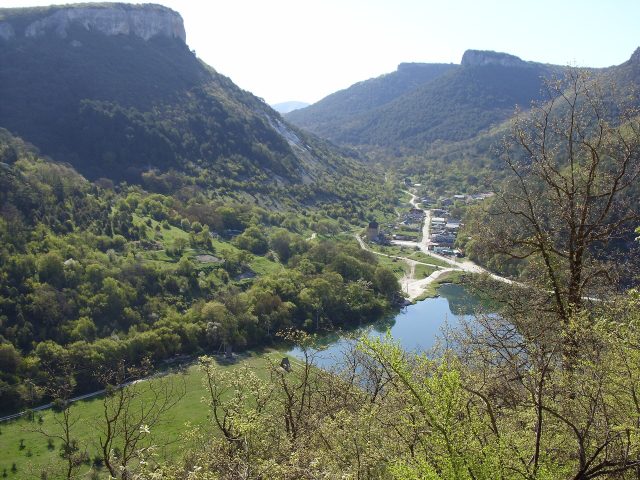
Photo: Bjørg Sandkjær (Bjorg Sandkjaer), CC BY 2.5
Awash is a place where time seems to slow, where the land shapes life rather than the other way around. The town stretches along the banks of the Awash River, nestled in the heart of a valley where desert expanses give way to pockets of green, and the horizon blurs into the haze of distant mountains. There’s no rush here, no hum of city life—just the quiet rustle of acacia leaves in the wind and the calls of birds circling above the water. Awash doesn’t demand attention like other Ethiopian towns; it simply exists, as much a part of the ancient landscape as the rocks and the river, a place that has watched civilizations rise and fall without ever needing to prove its worth.
This valley is more than just a point on a map—it’s one of humanity’s oldest cradles. Some of the earliest traces of our ancestors were uncovered here, fossils and stone tools dating back millions of years. The bones of early hominids, the first crude implements shaped by human hands, all emerged from this soil. Today, those discoveries reside in museums, but the valley itself remains an open-air archive, where every stone might hold a story older than memory. Visitors often feel the weight of that history, standing on ground that once bore the footsteps of those who came before us, long before cities or borders existed.
Life in Awash moves at the pace of the land, guided by tradition and the rhythms of the Afar people. The town serves as a gateway to their world, a semi-nomadic culture that has roamed these plains for generations. For the Afar, the Awash Valley isn’t just home—it’s sacred, woven into myths and legends. Their settlements, clusters of huts made from branches and hides, dot the riverbanks, while the town’s markets buzz with the exchange of goods: vibrant fabrics, handcrafted jewelry, and food cooked over open flames. It’s a place where the past and present coexist, where life unfolds without hurry, untouched by the demands of the modern world.
For those who seek wild landscapes and quiet adventure, Awash delivers. The Awash National Park, sprawling around the town, offers a glimpse of Africa as it once was—no crowds, no scripted tours, just the raw beauty of the savanna. Elephants drift across the plains, zebras graze on the hillsides, and lions, though elusive, leave their tracks in the dust. The river draws hippos and crocodiles, while its banks teem with birds, from kingfishers flashing in the sunlight to eagles soaring overhead. Travelers can hike through the valley, navigate rough tracks by jeep, or simply sit by the water as the sun dips below the horizon, painting the sky in shades of amber and violet.
Awash isn’t a place for luxury or spectacle. There are no grand hotels, no nightlife, no polished attractions vying for attention. What it offers instead is something rarer: a chance to step into the deep past, to feel the pulse of a land that has witnessed the birth of humanity. The town doesn’t cater to visitors—it doesn’t need to. Its quiet persistence is its charm. Here, you can shed the noise of the world, lose yourself in the vastness of the desert, and remember that some of the most profound experiences aren’t about what you see, but what you sense. Awash doesn’t provide answers, but it asks questions worth carrying with you long after you’ve left.
Eat & Drink
0 placesNothing in this category yet — the catalogue is still growing.
All placesPlaces on the map
Marker colour follows the categoryClimate and weather
Detailed weather: Awash- Average temperature
- 25 °C
- Precipitation per year
- 971 mm
Average air temperature
°C
23
25
26
26
27
28
25
25
24
25
23
23
Jan
Feb
Mar
Apr
May
Jun
Jul
Aug
Sep
Oct
Nov
Dec