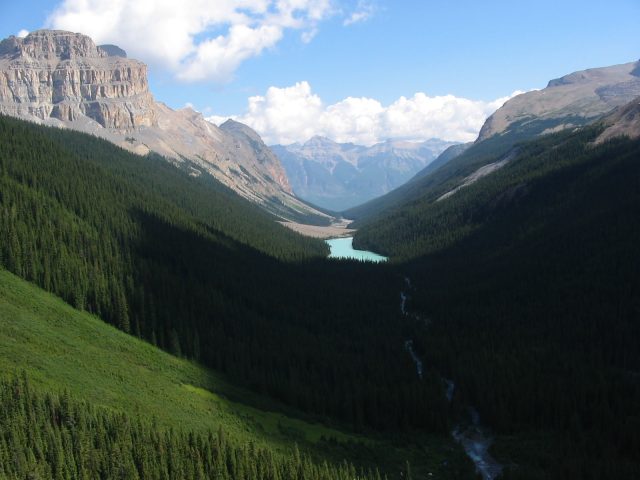
Abrau-Durso
Russia · 8 places
Photo: Lagashev, CC BY-SA 4.0
Nestled where the Black Sea meets the foothills of the Caucasus, Abrau-Dyurso is a quiet corner of Russia’s coastline, far from the crowded resorts and tourist traps. The landscape here unfolds in gentle layers—vineyards rolling down to the water’s edge, winding roads cutting through sunlit hills, and the vast expanse of Lake Abrau, the largest freshwater lake in the Krasnodar region, stretching like a mirror between the mountains. The village itself clings to the shore in a narrow strip, its rhythm dictated by the seasons: in summer, visitors come for the slow pace of life, the empty beaches, and the way the light lingers over the water; in winter, the air turns crisp, the crowds vanish, and the shoreline becomes a place for solitary walks.
The story of Abrau-Dyurso is inseparable from wine. In the late 19th century, Prince Lev Golitsyn chose these lands for their perfect climate—mild winters, warm but not scorching summers, and just enough sun to coax the best from the grapes. What began as an experiment grew into one of Russia’s most famous wineries, where traditional methods still shape every bottle. The cellars, lined with oak barrels, are open to visitors, and tastings here feel less like a tour and more like a conversation with history. Beyond the winery, the vineyards stretch endlessly, their rows disappearing into the haze of the horizon. Walking through them, you can almost taste the patience in the soil, the way the land has been shaped by hands and time.
Lake Abrau is a mystery wrapped in stillness. No one knows for certain how it formed—some say it’s a collapsed karst sinkhole, others insist it’s the remnant of an ancient sea. What’s certain is its quiet beauty: the water is so clear it seems to hold the sky, though swimming is rare here, with steep banks and depths plunging to twenty meters in places. Instead, the lake invites you to drift. Rent a boat or a catamaran and spend the day watching herons glide across the surface or the mountains reflect in the glassy water. In summer, the shore comes alive with festivals and music; in winter, the lake freezes into a vast, silent plain, its edges dusted with snow.
The beaches here are nothing like the packed sands of Sochi or Gelendzhik. There are no rows of sunbeds or blaring music, just small coves where the pebbles give way to fine sand, and the sea laps at the shore with a rhythm all its own. You can spend the day with a basket of food and a thermos of tea, listening to the waves and the occasional cry of a gull. Along the waterfront, cafés and restaurants serve fresh fish—sometimes caught that very morning—and the air is thick with the scent of grilling seafood. In the evenings, the promenade glows under strings of lights, and the sea sounds closer than it is, as if the water might reach out and touch your feet.
Beyond the village, the mountains beckon. The Markotkh Ridge rises just beyond the vineyards, its trails winding through forests and up to viewpoints where the whole landscape unfolds below—Lake Abrau like a sapphire, the sea a distant shimmer, the vineyards a patchwork of green. The area is dotted with hidden spots: waterfalls tumbling over rocks, ancient dolmens standing sentinel in the woods, and abandoned homesteads where time seems to have paused. But the real draw isn’t the sights; it’s the way the place makes you feel. There’s no rush here, no agenda. It’s a place for long walks along the shore, for afternoons spent on a terrace with a glass of local wine, for the quiet understanding that some moments are meant to be savored, not hurried.
See & Do
All of them

Eat & Drink
All of them
Places on the map
Marker colour follows the categoryClimate and weather
Detailed weather: Abrau-Durso- Average temperature
- 14 °C
- Precipitation per year
- 648 mm
- Sunshine hours per day
- 7.1 h
Average air temperature
°C
4
4
7
12
17
22
26
26
20
15
9
6
Jan
Feb
Mar
Apr
May
Jun
Jul
Aug
Sep
Oct
Nov
Dec